
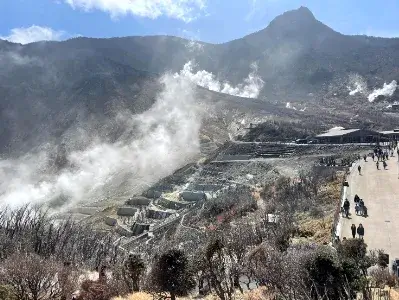
Carved into Hakone’s volcanic landscape, Owakudani (Great Boiling Valley) stands as one of Japan’s most dramatic geothermal areas, where the Earth’s raw power manifests in steaming vents, sulfurous streams, and an otherworldly atmosphere. This active volcanic zone offers visitors a rare opportunity to witness geological forces in action while experiencing unique local traditions that have developed around this powerful natural phenomenon.
A Landscape Born from Fire
Owakudani’s dramatic scenery originates from Mount Hakone’s last major eruption approximately 3,000 years ago, which created the massive caldera that now contains Lake Ashi. The area continues to exhibit intense volcanic activity, with multiple fumaroles releasing steam and volcanic gases at temperatures reaching 100°C. This geothermal activity not only shapes the stark, mineral-colored landscape but also provides the hot spring waters that have made Hakone famous as a spa destination.

Caede’s Geological Insight:
“Walking through Owakudani feels like stepping onto another planet. The yellow sulfur deposits, hissing steam vents, and pungent mineral scent create an atmosphere completely different from the serene beauty found elsewhere in Hakone. This stark contrast is what makes the experience so memorable—it’s a visceral reminder of the powerful geological forces that created and continue to shape this region. For more of Japan’s volcanic landscapes, consider visiting Mount Aso in Kyushu or Noboribetsu Hell Valley in Hokkaido.”
The Legendary Kuro-tamago (Black Eggs)
The Kuro-tamago Experience:
- Natural Cooking: Eggs boiled at 80°C in sulfurous steam
- Unique Appearance: Shells turn shiny black from mineral reaction
- Subtle Flavor: Slight sulfur taste with otherwise normal egg flavor
- Local Tradition: Consumed on-site at designated eating areas
Caede’s Culinary Adventure:
“Don’t just buy the eggs—watch them being cooked in the steaming vents! The process is fascinating. Each egg comes with a small packet of salt, but try it first without to appreciate the subtle mineral flavor. Remember that the ‘seven extra years’ legend applies only to your first egg—additional eggs don’t stack the benefits! For more unique Japanese food experiences, try the fresh seafood at nearby Lake Ashi or the kaiseki cuisine at Hakone ryokans.”

Frequently Asked Questions
Q: Is Owakudani safe to visit?
A: Generally yes, but follow all posted warnings and stay on designated paths. Volcanic gas levels are monitored, and areas may close if sulfur dioxide concentrations become too high. Check official websites for current conditions before visiting.
Q: What causes the strong smell at Owakudani?
A: The distinctive “rotten egg” odor comes from hydrogen sulfide gas released by the volcanic activity. The smell is strongest near active fumaroles and varies with wind direction.
Q: How much time should I allocate for a visit?
A: 60-90 minutes is sufficient for most visitors. This allows time to walk the main trail, see the main viewpoints, try the black eggs, and visit the souvenir shops.
Q: Are the black eggs safe to eat?
A: Yes, thoroughly tested and certified safe. The cooking process reaches temperatures that eliminate any harmful bacteria. However, people with egg allergies or specific dietary restrictions should avoid them.
Q: What should I wear to Owakudani?
A: Sturdy walking shoes, weather-appropriate layers (temperatures can change rapidly), and clothing you don’t mind getting slightly sulfuric-smelling. Avoid light-colored shoes as the mineral dust can stain.
Exploring the Volcanic Landscape
Main Walking Trail:
A well-maintained 30-minute circular path takes visitors past the most active areas while ensuring safety. The trail includes:
- Multiple observation decks with different perspectives
- Information panels explaining geological features
- Designated photo spots with Mount Fuji backdrops (on clear days)
- Safety barriers protecting visitors from hazardous areas
Geological Features:
- Fumaroles: Steam vents releasing volcanic gases
- Solfataras: Sulfur-depositing vents creating yellow mineral formations
- Hot Springs: Naturally heated water sources feeding Hakone’s onsen
- Altered Ground: Colorful mineral deposits creating surreal landscapes

Caede’s Exploration Strategy:
“Start your walk counter-clockwise to save the best Fuji viewpoints for later in your circuit. On clear days, the view of Mount Fuji rising above the steam is absolutely spectacular—some of the best photography opportunities in all of Hakone. Take your time reading the information panels; they provide fascinating insights into the volcanic processes you’re witnessing. For more educational nature experiences, consider visiting Jigokudani Monkey Park to see snow monkeys in hot springs or Shirakawago to learn about traditional mountain village life.”
Practical Visitor Information
📍 Access:
- Hakone Ropeway: Most scenic approach, connecting from Lake Ashi or Gora
- Bus: Direct buses from Hakone-Yumoto and other major Hakone areas
- Car: Limited parking available, often crowded during peak times
⏰ Operating Hours:
- Generally: 9:00 AM – 5:00 PM (varies seasonally)
- Best Visiting Time: Morning for clearest views, weekdays to avoid crowds
- Seasonal Variations: Winter may have restricted access due to weather
💴 Admission and Costs:
- Entry: Free (no admission fee to the valley)
- Kuro-tamago: ¥500 for 5 eggs (sold in sets only)
- Ropeway Fare: Included in Hakone Free Pass or approximately ¥2,000 one way

Caede’s Photography Advice:
“The most iconic shot is the torii gate with Fuji behind it, best captured from the right side of the gate looking toward the mountain. For unique perspectives, take the cruise during ‘blue hour’ just after sunset when the ships are illuminated. For more iconic Japanese photography locations, consider Fushimi Inari’s torii tunnels or Amanohashidate’s sandbar view.”
Safety Considerations
Owakudani is an active volcanic area requiring specific precautions:
Health Considerations:
- Visitors with respiratory conditions should consult doctors before visiting
- Pregnant women and young children may want to limit exposure
- The smell can trigger headaches in sensitive individuals
Environmental Factors:
- Sudden weather changes common at this elevation
- Strong winds can affect ropeway operations
- Trail conditions may change with seismic activity
Following Guidelines:
- Stay on marked trails at all times
- Respect all warning signs and barriers
- Do not enter restricted areas
- Follow staff instructions during gas alerts

Caede’s Safety Note:
“Check the volcanic gas levels on the official website before visiting. When the ropeway announces that windows should be closed, take it seriously—the sulfur dioxide levels are being monitored for your protection. If you have asthma or other respiratory issues, consider viewing from the ropeway without disembarking. Safety always comes first in active volcanic areas.”
The Hakone Ropeway Experience
The journey to Owakudani via the Hakone Ropeway is an attraction in itself:
Scenic Highlights:
- Panoramic views of Lake Ashi and Mount Fuji
- Dramatic descent into the volcanic valley
- Unique perspective of the geothermal activity below
Operational Information:
- Cable cars depart every minute during peak times
- Large windows for optimal viewing
- Multilingual announcements explaining sights
- Connections to other Hakone transport options
Caede’s Ropeway Tip:
“For the best photos from the ropeway, position yourself near the windows but not against them to avoid reflections. The section between Owakudani and Sounzan offers particularly dramatic views of the volcanic landscape. If traveling with the Hakone Free Pass, you can ride multiple times to experience different lighting conditions. For other scenic aerial journeys in Japan, try the ropeways at Mount Koya or Miyajima’s cable car.”
Seasonal Variations
Spring (March-May):
- Clear days offer spectacular Fuji views above blooming mountain flora
- Comfortable walking temperatures
- Occasional misty atmospheres creating mystical scenes
Summer (June-August):
- Lush green contrasts with mineral-colored ground
- Higher chance of clear visibility
- Can be warm—bring water and sun protection
Autumn (September-November):
- Crisp air provides excellent visibility
- Autumn foliage creates beautiful color contrasts
- Ideal photography conditions
Winter (December-February):
- Snow-dusted landscapes create dramatic scenery
- Fewest crowds and clearest air
- Cold temperatures enhance steam visibility
Scientific and Educational Value
Owakudani serves as an important site for:
- Volcanology research: Ongoing monitoring of gas emissions and seismic activity
- Geothermal energy studies: Understanding natural heat sources
- Environmental science: Observing extremophile organisms in harsh conditions
- Educational programs: School visits and public science education
Caede’s Educational Perspective:
“Beyond the dramatic scenery, Owakudani offers fascinating lessons in earth science. Notice how different minerals create various colors in the landscape—yellows from sulfur, reds from iron oxide, whites from silica. The information panels provide accessible explanations of complex geological processes. For more scientific tourism in Japan, visit Tsukiji’s fish market to learn about marine biology and sustainable fishing.”

Photography Opportunities
Iconic Shots:
- Black eggs against steaming volcanic background
- Mount Fuji framed by rising steam plumes
- Colorful mineral deposits and stark landscapes
- Ropeway cables cutting through misty valleys
Technical Tips:
- Use polarizing filter to reduce haze and enhance colors
- Fast shutter speeds to capture steam movement
- Morning light for best Fuji visibility and dramatic shadows
- Include human elements for scale against vast landscapes
Souvenirs and Local Products
Edible Souvenirs:
- Kuro-tamago (available only at Owakudani)
- Black egg-themed sweets and snacks
- Local honey produced by bees feeding on mountain flora
Non-Edible Items:
- Sulfur soaps and beauty products
- Volcanic rock souvenirs
- Photography books showcasing the area
- Educational materials about volcanoes
Environmental Conservation
Owakudani faces ongoing conservation challenges:
Protection Efforts:
- Monitoring and managing visitor impact on fragile ecosystems
- Controlling erosion on walking paths
- Researching effects of tourism on volcanic gas monitoring
- Balancing accessibility with preservation
Visitor Responsibility:
- Stay on designated paths to protect delicate ground
- Carry out all trash (limited disposal facilities)
- Respect scientific monitoring equipment
- Follow seasonal access restrictions

Caede’s Conservation Thought:
“Remember that you’re walking through a living laboratory where scientists monitor volcanic activity that could affect surrounding communities. Your respectful visitation supports both conservation and important scientific work. For other ecotourism experiences in Japan, consider the sustainable tourism practices at Yakushima’s ancient forests or the community-based tourism in Okinawa’s remote islands.”
Cultural Significance
Owakudani holds important cultural meaning beyond its geological significance:
Historical Context:
- Featured in Edo-period travel literature and ukiyo-e prints
- Traditional beliefs about the valley’s spiritual power
- Inspiration for artists and poets throughout Japanese history
Modern Culture:
- Featured in numerous films, anime, and television shows
- Subject of scientific documentaries and photography books
- Symbol of Hakone’s unique natural heritage
Caede’s Final Reflection:
“Owakudani offers something increasingly rare in our modern world—direct, unmediated contact with the Earth’s primal forces. Standing where steam hisses from cracks in the ground, smelling the sulfur that speaks of immense pressure and heat miles below, and witnessing landscapes painted in mineral colors unseen elsewhere creates a humbling awareness of our planet’s living, breathing nature. More than just a tourist stop on the Hakone circuit, Owakudani provides a profound geological pilgrimage that connects us to deep time and powerful natural processes. It reminds us that beauty exists not only in serene gardens and perfect vistas but also in raw, untamed landscapes where the Earth itself is still at work, shaping and reshaping the world beneath our feet.”
Your Japan Tour
As seasoned Japan experts, we create perfect Japan package tours including destinations like Hakone. Check out our group tours and private tours, or contact us to start planning your unforgettable holiday to this fascinating country full of once-in-a-lifetime experiences, culture, history, nature, and delicious food!