
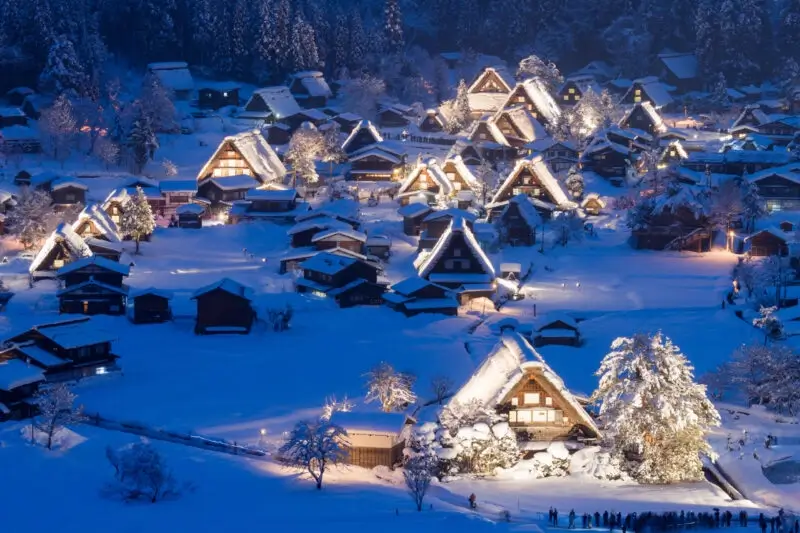
Tucked away in the mountains of Gifu Prefecture, Shirakawa-go is one of Japan’s most iconic rural destinations. Famous for its gassho-zukuri farmhouses—steep thatched roofs designed to shed heavy snow—it’s a place where time slows down and tradition lives on.
The village is listed as a UNESCO World Heritage Site, and draws visitors year-round for its fairytale-like scenery, cozy atmosphere, and magical winter light-up events. Whether you visit in summer greenery or under a blanket of snow, Shirakawa-go promises a timeless glimpse into traditional Japan.
Why is Shirakawa-go Famous?
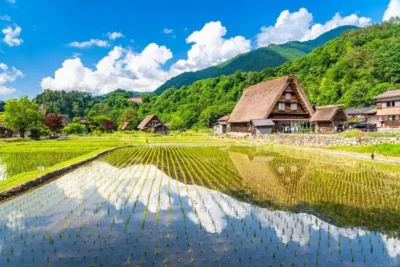
Shirakawa-go is famous for its traditional gassho-zukuri farmhouses, a rare architectural style with steep thatched roofs built to withstand heavy snow. The village is a UNESCO World Heritage Site, known for its timeless scenery, preservation of rural culture, and magical winter landscapes. These houses—some over 250 years old—are called gassho-zukuri, meaning “constructed like hands in prayer.” The ste cr5ep roofs are designed to shed snow easily, allowing families to live and farm even in the harshest winters. Many are still lived in today, while others have been converted into museums, guesthouses, and local restaurants.
I visited in mid-January, when the village was completely covered in deep snow. The thatched roofs looked like giant marshmallows, and soft lantern light shone from the windows as evening set in. Locals shoveled snow from their doorways, and children played near the footpaths. It wasn’t just beautiful—it felt like the village was quietly alive beneath the snow.

The first time I saw Shirakawa-go in the snow, I literally gasped. It’s one of those places where the photos just don’t do it justice—you have to feel the cold air, see the light, and hear the quiet for yourself.
Must-See Spots in Shirakawa-go
🔹 Shiroyama Viewpoint (城山展望台)
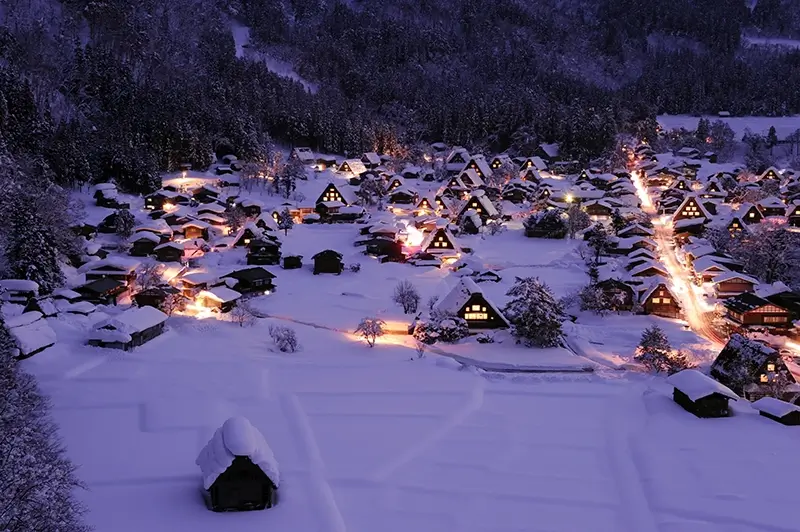
The best-known viewpoint overlooking the village. From here, you can see the full cluster of thatched roofs nestled in the snowy valley.
I hiked up in the late afternoon while soft snow was still falling. From the top, everything was covered in white—rooftops, fields, even the distant mountain slopes. Smoke rose from the chimneys, and the only sounds were footsteps crunching and the shutter clicks of other travelers.
🔹 Wada House (和田家)
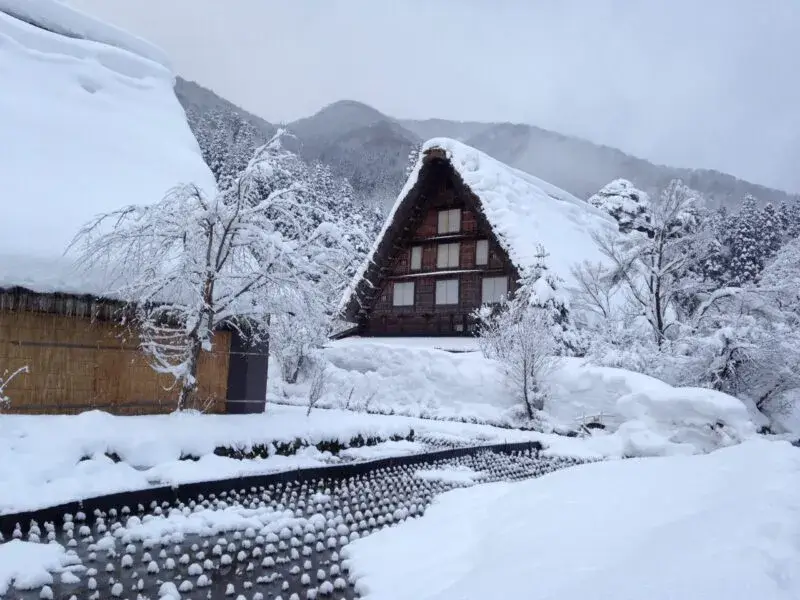
The largest and best-preserved farmhouse open to the public. Inside, visitors can explore traditional tools, a central hearth, and wooden architecture.
Stepping inside from the snow felt like entering a different world. The warmth of the hearth, the smell of smoke, and the dark wooden beams overhead made it easy to imagine life here hundreds of years ago—even in deep winter.
🔹 Suspension Bridge (であい橋)
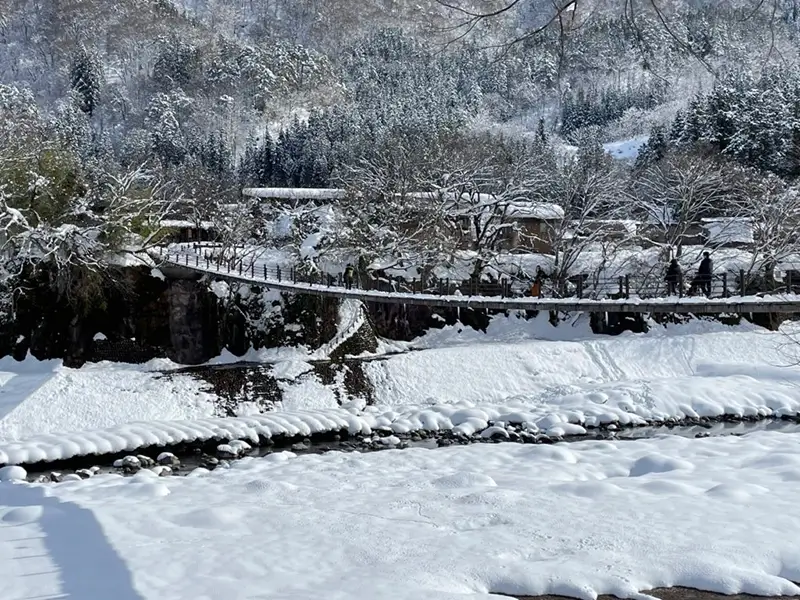
The main pedestrian entrance into Shirakawa-go, offering your first view of the village surrounded by mountains.
I arrived around 10 AM. As I crossed the bridge, I could already see the gassho-style houses lined up across the snow. The path was a bit slippery, but many other visitors were stopping to take photos just like me—it was the perfect first stop.
🔹 Shirakawa Hachiman Shrine (白川八幡神社)
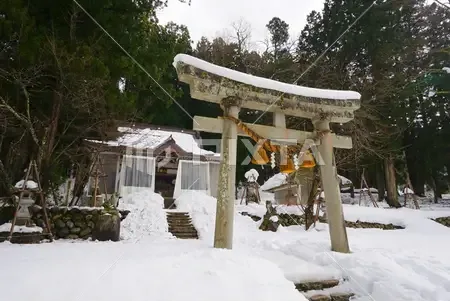
A quiet shrine located at the edge of the village, surrounded by tall trees and usually less crowded.
I visited in the early afternoon and it was peaceful, with only a few people around. The snow had been cleared on the path, and walking through the torii felt like stepping into a calm, hidden corner of the village. I sat on a wooden bench for a short break before heading back into the main area.

I always tell people to take their time here—don’t just rush for the famous viewpoint. Wander the back paths, peek inside a farmhouse, and stop for a warm drink. That’s when Shirakawa-go really stays with you.
Shirakawa-go vs. Hida Folk Village – What’s the Difference?
Shirakawa-go is a real, living village, while Hida Folk Village is an open-air museum in Takayama that recreates traditional architecture. Both showcase gassho-zukuri houses, but the experience is quite different. Shirakawa-go is home to families who still live and work in the historic buildings. Visitors walk through actual neighborhoods, pass schoolchildren, and see smoke rising from hearths. It’s immersive, seasonal, and atmospheric—especially in winter.
Hida Folk Village (Hida no Sato), on the other hand, is a beautifully curated collection of relocated homes. It’s quieter, less touristy, and perfect for those who want to take their time examining the architecture, tools, and interior displays. Some houses here are over 200 years old, and you can often enter them freely, unlike Shirakawa-go where many homes are private.
I visited both. Shirakawa-go had that “wow” factor—snow, light, life. But at Hida Folk Village, I could stand inside an old farmhouse and look up at the massive wooden beams in silence. If you love photos and nature, choose Shirakawa-go. If you love details and peaceful walks, go with Hida Folk Village—or do both like I did.
How to Get to Shirakawa-go
From Tokyo
There’s no direct train to Shirakawa-go, but it’s easily reached via Takayama or Kanazawa.
Via Takayama
• Tokaido Shinkansen to Nagoya (~1.5 hrs)
• JR Hida Limited Express to Takayama (~2.5 hrs)
• Highway bus to Shirakawa-go (~50 min)
Via Kanazawa
• Hokuriku Shinkansen to Kanazawa (~2.5–3 hrs)
• Highway bus to Shirakawa-go (~1.5 hrs)
From Takayama
Buses run several times daily from the Takayama Bus Terminal, located right next to JR Takayama Station. The ride takes around 50 minutes, and round-trip tickets can be booked online or at the terminal.
The best way to explore Shirakawa-go—especially during the winter light-up—is by joining our Shirakawa-go Light-Up Tour. It includes transportation from Takayama, expert guidance, and enough time to enjoy both Shirakawa-go and Takayama in one seamless experience.
Best Time to Visit Shirakawa-go
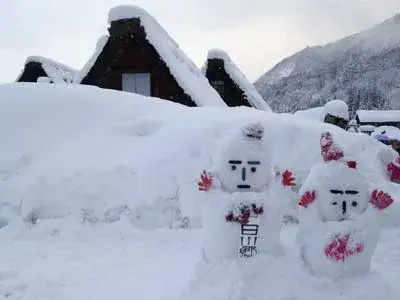
If you’re looking for the most magical scenery, winter is by far the best time to visit Shirakawa-go. From January to February, the village transforms into a snowy wonderland, with thick layers of snow blanketing the rooftops and smoke curling from chimneys. The highlight is the winter light-up events, when the entire village glows in the evening—truly like a scene from a storybook. This period is extremely popular, so advance booking is essential.
Other Seasons at a Glance
• Spring (April–May): Cherry blossoms bloom in late April, with snow still on the mountains. Quiet and scenic.
• Summer (June–August): Green rice fields and clear blue skies. Great for peaceful walks and nature photography.
• Autumn (October–November): Vibrant fall colors and cool weather. Ideal for capturing traditional architecture against red and gold leaves.

Winter is my favorite—no contest! But honestly, there’s never a bad time to come. Each season has its charm, and I’ve visited in every one. Just remember to dress for the weather, especially if you’re heading up to the viewpoint!
Shirakawago Winter Illumination 2026: What You Need to Know
The winter illumination events transform Shirakawa-go into a magical snow globe scene.
The illumination events in 2026 will be held on January 12 (Mon), 18 (Sun), 25 (Sun), and February 1 (Sun).
Important Notes for 2026:
- Advance reservation required for all visitors during illumination dates
- Private vehicles prohibited – must use designated shuttle buses
- Accommodations book out 6-8 months in advance
- Temperature can drop to -10°C – dress accordingly

Caede’s promotion:
We have secured a limited number of highly sought-after tickets that are normally very difficult to obtain, and we offer them as part of our tour. We hope you will consider joining us. Check here!