
What is Ryoanji Temple?
Ryoanji (龍安寺), located in northwestern Kyoto, is one of the most famous Zen temples in Japan—renowned worldwide for its mysterious rock garden. It belongs to the Rinzai sect of Zen Buddhism and has been designated as a UNESCO World Heritage Site as part of the “Historic Monuments of Ancient Kyoto.”
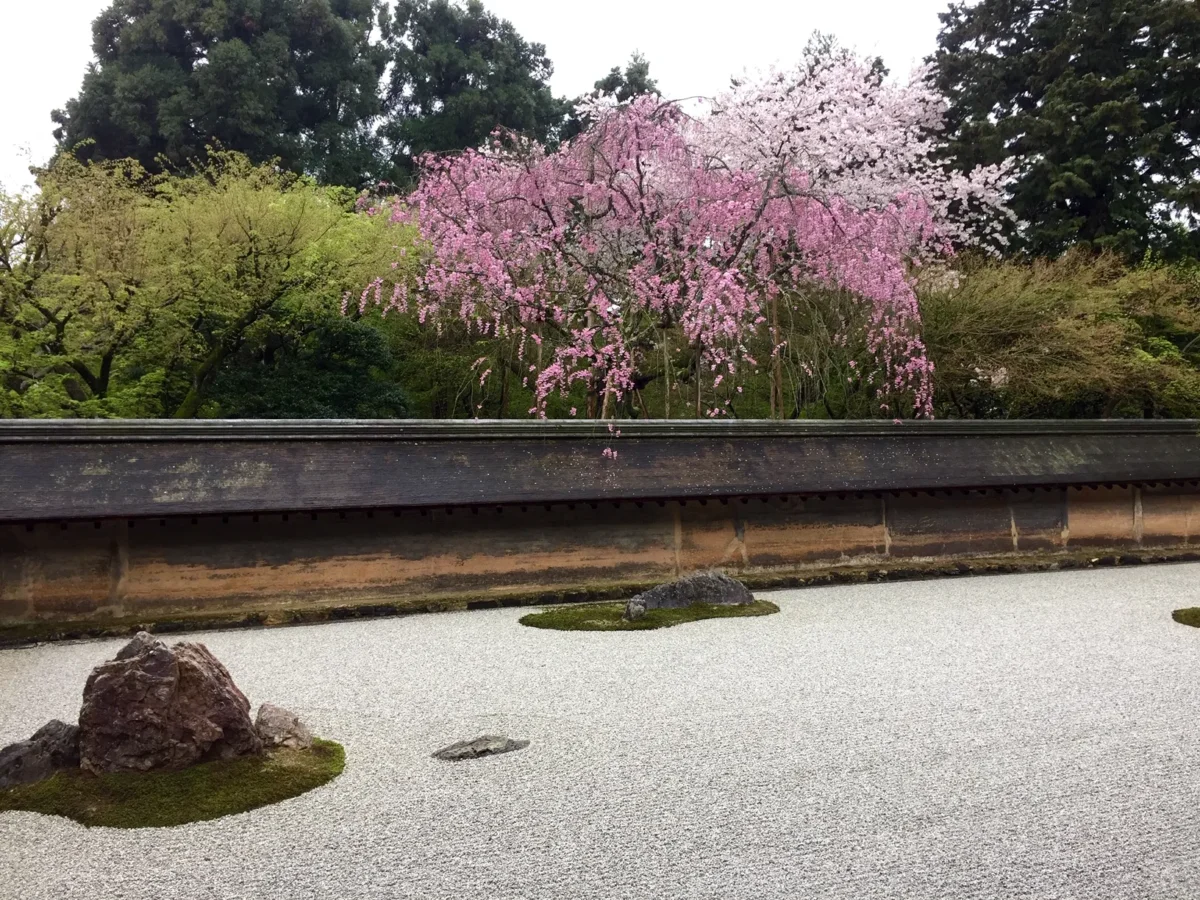
The highlight of the temple is its karesansui (dry landscape) rock garden, which consists of 15 stones carefully arranged on white gravel—but no matter where you stand, you can only see 14. This layout is believed to embody Zen aesthetics, provoking deep reflection and serenity.
While small in size, Ryoanji’s minimalism and tranquility have made it an enduring symbol of Japanese Zen culture, attracting thinkers, designers, and travelers from all over the world.
History of Ryoanji Temple
Ryoanji Temple was originally an aristocratic estate during the Heian period, owned by the Fujiwara family. In 1450, it was converted into a Zen temple by Hosokawa Katsumoto, a powerful shogunate deputy (kanrei). The temple belonged to the Myoshinji school of the Rinzai sect.
The temple was destroyed during the Ōnin War (1467–1477), a conflict that devastated much of Kyoto. It was rebuilt shortly afterward, and the famous rock garden is believed to have been created during this reconstruction—although the exact date and designer remain unknown.
Over the centuries, the temple became increasingly famous, especially among scholars and artists drawn to the serenity and abstraction of its garden. Today, Ryoanji stands as a masterpiece of Japanese aesthetics and Zen philosophy.
The Famous Rock Garden Explained
The highlight of Ryoanji Temple is undoubtedly its rock garden—an iconic example of karesansui (dry landscape) design. Measuring about 25 by 10 meters, the garden contains 15 carefully placed rocks set amidst meticulously raked white gravel. What makes it so intriguing?
- No trees or flowers: The simplicity invites deep reflection.
- Mystery of design: No matter where you stand, only 14 of the 15 stones are visible at once. Zen teachings suggest that only through enlightenment can you see all 15.
- Symbolism: Interpretations vary—some see islands in the sea, others see tiger cubs crossing water.
The garden has no official explanation, allowing each visitor to experience it in their own way. This ambiguity is central to Zen philosophy and part of what gives the garden its worldwide appeal.
Other Highlights in the Temple Grounds
While the rock garden gets most of the attention, Ryoanji Temple’s spacious grounds offer much more:
Kyōyōchi Pond
Originally built in the 12th century, this tranquil pond predates the Zen temple itself. Surrounded by lush trees and seasonal flowers, it’s home to ducks, koi, and herons. In spring and autumn, the reflections of cherry blossoms and colored leaves make this spot especially scenic.
Walking Paths
The garden paths around the pond provide a peaceful stroll through moss-covered grounds, stone lanterns, and small shrines. It’s the perfect complement to the more minimalist rock garden—more movement, more nature, but still deeply serene.
The Main Hall (Hōjō)
This building, rebuilt in the late 18th century after a fire, houses the famous rock garden. Inside, you’ll find sliding fusuma doors with paintings and a view directly onto the garden, giving insight into traditional Zen architecture.
How to Get to Ryoanji Temple
Ryoanji Temple is located in the northwestern part of Kyoto, near other famous landmarks like Kinkakuji (Golden Pavilion).
From Kyoto Station:
- By Train: Take the JR Sanin Line to Enmachi Station, then transfer to the Randen Kitano Line and get off at Ryoanji Station. The temple is a 5-minute walk from the station.
- By Bus: Take Kyoto City Bus #50 or #55 to Ritsumeikan Daigaku-mae stop. Walk about 7–10 minutes to reach the temple.
- From Kinkakuji: It’s a 15–20 minute walk through a peaceful residential area, making it easy to visit both temples in one trip.
Nearby Landmarks:
- Kinkakuji (Golden Pavilion) – 20 min walk
- Ninna-ji Temple – 15 min walk or 1 stop on Randen Line
- Toei Kyoto Studio Park – short bus ride
Q&A – Ryoanji Travel Tips
What is Ryoanji Temple famous for?
Ryoanji is best known for its Zen rock garden, considered one of the finest examples of kare-sansui (dry landscape) gardens in Japan. The simplicity and mysterious layout of its 15 stones continue to intrigue visitors and scholars alike.
Is Ryoanji worth visiting?
Yes—especially if you enjoy calm, reflective environments. It’s quieter than other Kyoto temples, and the rock garden offers a unique space for mindfulness and introspection.
How long do you need at Ryoanji Temple?
Most visitors spend about 45 minutes to 1 hour. The rock garden is the highlight, but don’t miss the Kyoyochi Pond and the temple’s peaceful walking paths.
Is there an entrance fee for Ryoanji?
Yes. As of 2026, admission is ¥600 for adults and ¥300 for children. This includes access to the garden and the main hall.
Recommended Tours
・Winter Japan Tour Package 7 Days / Snow Monkey
・8-Day Small Group Tour Golden Route Japan in Cherry Blossoms Season
・15-Day Small Group Tour Golden Route Japan through Shikoku and Kyushu in Cherry Blossoms Season
Visitor Info – Ryoanji Temple
Location
Address: 13 Ryoanji Goryonoshita-cho, Ukyo-ku, Kyoto 616-8001
Official Website: https://www.ryoanji.jp/
Hours & Admission
- Opening Hours: 8:00 AM – 5:00 PM (March–November) 8:30 AM – 4:30 PM (December–February)
- Admission: ¥600 (adults), ¥300 (children)
Facilities
- Restrooms available near the entrance
- Small souvenir shop and tea room on-site
- English pamphlets and signage available
- Wheelchair accessible in most areas
Last updated: December 2025