
Nestled in the heart of Nara Park, Todai-ji (東大寺) is not merely a temple; it is a monumental testament to the spiritual ambition, artistic genius, and political will of 8th-century Japan. Home to the world’s largest bronze statue of the Buddha Vairocana—the Great Buddha, or Daibutsu—housed within the planet’s largest wooden building, this UNESCO World Heritage Site offers a breathtaking encounter with scale and serenity that has captivated visitors for over 1,250 years.
A Temple Forged by a Nation’s Will
What makes Todai-ji uniquely profound is its origin story. Founded by Emperor Shomu in the Nara Period, it was conceived as the head temple of a national network of monasteries. Its purpose was nothing less than to use the power of Buddhism to protect and unite the entire nation. The construction was a staggering national project, mobilizing the resources of the entire country and consuming most of Japan’s bronze supply for years. This was not just an act of faith, but the embodiment of a state’s identity and its quest for peace.
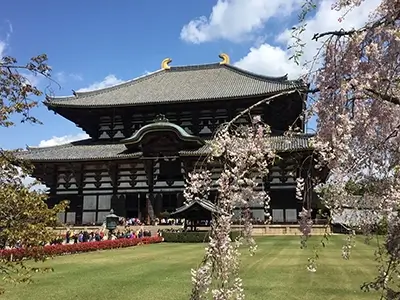

The Daibutsuden: A Palace for the Great Buddha
The approach to Todai-ji is guarded by the magnificent Nandaimon (Great South Gate), an imposing structure housing two fierce, 8-meter-tall Nio guardian statues, masterpieces carved by the legendary sculptors Unkei and Kaikei. Beyond it lies the awe-inspiring Daibutsuden (Great Buddha Hall). Though the current 18th-century reconstruction is about 30% smaller than the original, it remains the largest wooden building in the world. Stepping inside, the vast, dimly lit space draws your eyes upward to the serene, 15-meter-tall face of the Great Buddha (Daibutsu). Cast in bronze in eight stages over several years, this majestic figure represents the cosmic Buddha Vairocana. The sense of scale is humbling, a physical manifestation of the divine that has inspired pilgrims for centuries.

Caede’s Architectural Insight:
“Standing inside the Daibutsuden is an exercise in perspective. Notice how the Buddha’s eyes seem to follow you—a deliberate artistic technique that creates a profound sense of connection. Look for the famous ‘pillar with a hole’ at the base of one rear column. It’s said that those who can squeeze through this nostril-sized opening are granted enlightenment in their next life! For a fascinating contrast in Japanese sacred architecture, consider the elegant simplicity of Meiji Jingu in Tokyo, a Shinto shrine built over a millennium later.”
Key Areas to Explore
- The Daibutsuden & Great Buddha: The awe-inspiring centerpiece of Todai-ji.
- Nigatsu-do Hall: A sub-temple on the hillside east of the main hall, famous for the Omizutori fire festival each March. It offers one of the best views over Nara.
- Todai-ji Museum: Opened in 2011, this modern museum houses the temple’s most precious treasures, including breathtaking sculptures too fragile for the main halls.
- Nara Park: The temple grounds are part of this vast park, home to over 1,000 friendly sika deer, considered sacred messengers of the gods.
Q&A
Q: What is the best time to visit Todai-ji?
A: Early morning at opening is ideal to avoid the largest crowds. The temple is beautiful year-round, but spring (cherry blossoms) and autumn (vibrant foliage) offer particularly stunning backdrops.
Q: How long should I plan for my visit?
A: Allocate 1.5 to 2 hours for the main precinct. If you wish to visit the Todai-ji Museum and Nigatsu-do Hall, plan for at least 3 hours.
Q: What should I wear when visiting?
A: Comfortable walking shoes are essential, as the grounds are extensive with gravel paths and stone steps. Modest attire is appreciated.
Seasonal Highlights and Events
- Omizutori (Water-Drawing Festival): Held from March 1-14 at Nigatsu-do Hall, this 1,250-year-old ceremony features giant burning torches paraded along the balcony—a breathtaking, ancient spectacle.
- Cherry Blossoms: Late March to early April transforms Nara Park into a pink and white wonderland.
- Autumn Foliage: The temple grounds and surrounding mountains glow with brilliant reds and golds in November.
Access Information
Access:
- A 20-25 minute pleasant walk from Kintetsu Nara Station.
- A 30-minute walk from JR Nara Station (both through Nara Park).
- City loop buses from either station also stop at “Todai-ji Daibutsuden.”
Hours:
- Daibutsuden: 7:30 AM – 5:30 PM (Apr-Oct) / 8:00 AM – 5:00 PM (Nov-Mar)
- Todai-ji Museum: 9:30 AM – 5:00 PM (Last entry 4:30 PM). Closed Mondays.
Admission:
- Daibutsuden: Adults 600 JPY
- Todai-ji Museum: Adults 600 JPY
- Combined Ticket: 1,000 JPY
Essential Etiquette and Tips:
- Speak quietly within the temple halls.
- Large backpacks should be carried in front or stored in lockers.
- Do not feed the deer inside the temple precincts.

Recommended Tours: Click on the tour title!
・The Best of Japan Private Tour Package 7 Days
・8-Day Small Group Tour Golden Route Japan in Cherry Blossoms Season
Your Japan Tour
As seasoned Japan experts, we create perfect Japan package tours including destinations like Nara. Check out our group toursand private tours, or contact usto start planning your unforgettable holiday to this fascinating country. Japan is full of once-in-a-lifetime experiences, culture, history, nature, and delicious food!