
Rising majestically to 3,776 meters, Mount Fuji stands not just as Japan’s highest peak, but as the nation’s spiritual heart and most recognizable symbol. This perfectly symmetrical stratovolcano, revered for centuries in art, literature, and religion, offers visitors a profound connection to Japan’s natural beauty and cultural heritage. Whether viewed from afar or climbed during the official season, Mount Fuji provides an unforgettable experience that embodies the Japanese concept of mono no aware—the poignant beauty of impermanence.
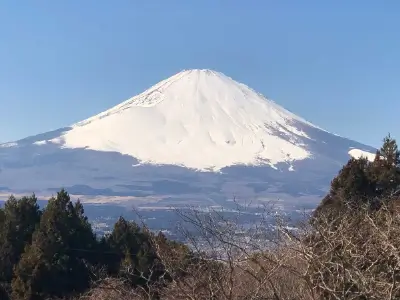
A Mountain of Spiritual Significance
Mount Fuji’s cultural importance transcends its physical presence. Designated a UNESCO World Heritage site in 2013 as a “Cultural Heritage” rather than a natural one, Fuji-san (as it’s respectfully called) has been worshipped as a sacred site for over a thousand years. The mountain is home to numerous shrines, with the Yoshida Trail traditionally used by pilgrims since the Edo period. This spiritual dimension adds depth to every encounter with the mountain, whether you’re climbing its slopes or simply admiring it from one of the many viewing spots around the Fuji Five Lakes region.
Caede’s Spiritual Insight:
“What many visitors don’t realize is that climbing Mount Fuji was historically a religious pilgrimage. The traditional saying ‘He who climbs Mount Fuji once is a wise man; he who climbs it twice is a fool’ reflects both the mountain’s spiritual significance and its physical challenge. Today, climbers often visit the Arakurayama Sengen Park Fujisan Hongu Sengen Taisha Shrine before ascending. For those interested in Japan’s spiritual heritage, consider also visiting Mount Koya, the center of Shingon Buddhism, or Ise Jingu, Japan’s most sacred Shinto shrine.”
The Climbing Experience: Preparation and Realities
The official climbing season runs from early July to mid-September, when weather conditions are most stable and mountain huts are operational. There are four main trails—Yoshida, Subashiri, Gotemba, and Fujinomiya—each offering different characteristics and difficulty levels.
Essential Climbing Information:
- Best Time: July 10 to September 10 (official season)
- Difficulty: Moderate to strenuous (not technical but physically demanding)
- Duration: 5-8 hours ascent, 3-5 hours descent (typically done overnight)
- Altitude Sickness: A real concern—proper acclimatization is crucial

Caede’s Climbing Advice:
“Climbing Mount Fuji is about endurance, not speed. Start your ascent in the afternoon, rest at a mountain hut around 8 PM, then complete the climb to reach the summit for sunrise—the famous goraikō experience. Pack layers (temperatures range from 25°C at base to 0°C at summit), proper hiking shoes, headlamp, and plenty of water. Remember that the descent can be harder on your knees than the ascent! For alternative mountain experiences in Japan, consider the more accessible Mount Takao near Tokyo or the alpine landscapes of the Japanese Alps.”
Frequently Asked Questions
Q: Can beginners climb Mount Fuji?
A: Yes, but preparation is key. The climb is non-technical but physically demanding due to altitude and steep terrain. Beginners should choose the Yoshida Trail (most facilities) and allow extra time.
Q: What’s the best way to see Mount Fuji without climbing?
A: The Fuji Five Lakes region offers spectacular views. Lake Kawaguchiko provides classic reflections, while the Chureito Pagoda in Fujiyoshida offers iconic photo opportunities. Early morning typically provides the clearest views.
Q: Is Mount Fuji active?
A: Yes, it’s classified as an active volcano with low risk of eruption. The last eruption was in 1707. Monitoring systems are in place, and visitors should follow any advisories.
Q: How do I get to Mount Fuji from Tokyo?
A: Direct buses run from Shinjuku and Tokyo stations to the 5th Station (2-2.5 hours). Trains require transfers but offer scenic views. The Fuji Excursion limited express is most comfortable.
Q: Are there facilities on the mountain?
A: During climbing season, mountain huts provide basic accommodation and meals. Toilets are available at stations (¥200-300 fee). No facilities operate outside official season.
The Different Faces of Mount Fuji
As Japan is a very humid country, we can see Mount Fuji only 20% of the year. We are most likely to see it entirely when it is less humid, that is to say in winter (between December and February). So even Japanese people, when we can see it, will take out their camera or iPhone to take a picture of it. When we imagine its silhouette, Mount Fuji always wears a snow white hat, and in summer he takes off his hat. So if you want to see Mount Fuji with his white hat on, we advise you to come to Japan in winter or early spring.
Finally, as it is the highest mountain in Japan, we can see it from everywhere. But its shape is different depending on where you see it from. Enjoy these pictures I took from various vantage points when I was traveling with foreign tourists!
From Kawaguchiko
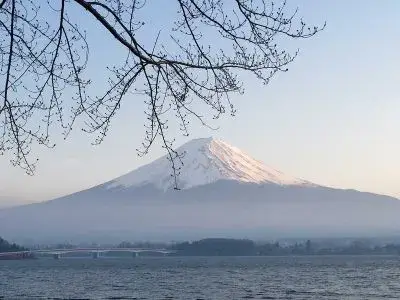
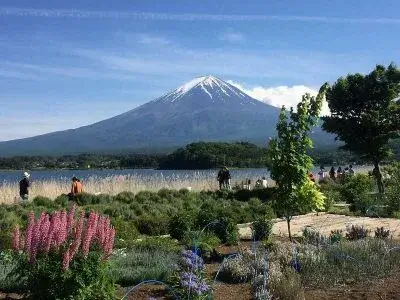
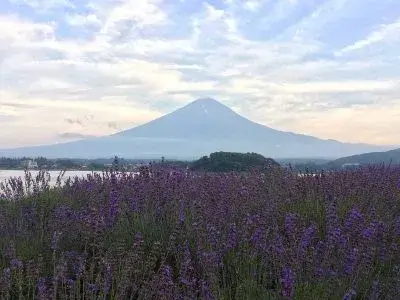
Among the 5 lakes of Mount Fuji, Kawaguchiko Lake offers more activities for tourists with many festivals organized according to the season. We can go for a walk on the lake, visit museums and spend the night in a hotel or ryokan while admiring Mount Fuji maybe from your room window.
From Mount Kachikachi-yama
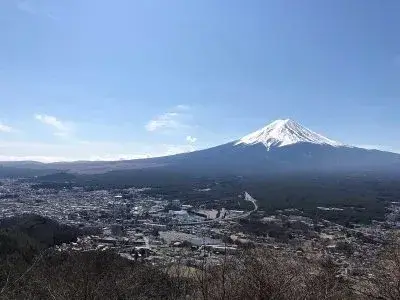
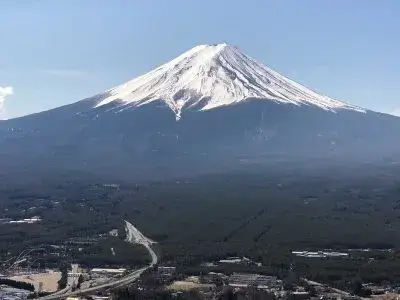
It is perhaps from here that we have the most beautiful view of Mount Fuji (of course when the sky is clear). We are really in front of it.
From Yamanakako and Saiko
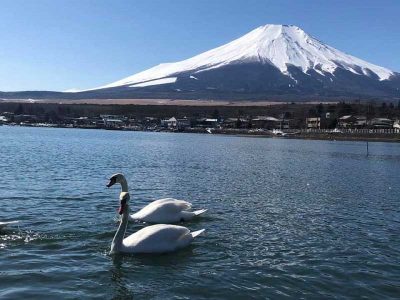
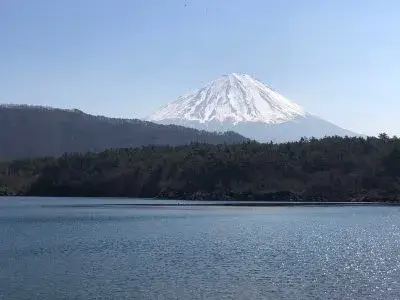

Yamanaka-ko Lake is located further east among the 5 lakes of Mount Fuji. In winter, swans come and spend time here.
Mt Fuji from Gotemba
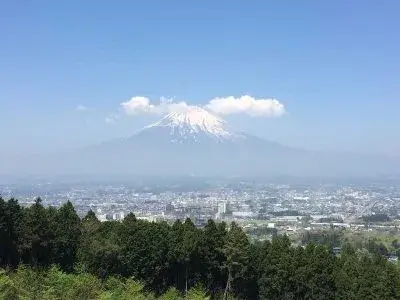
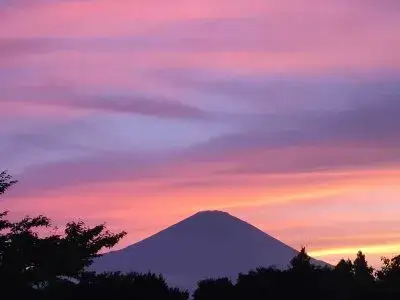
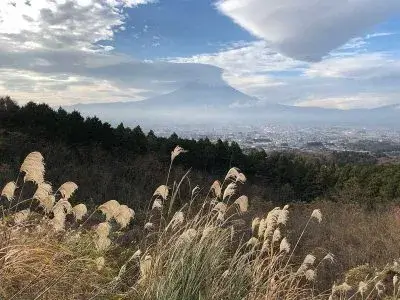
The city of Gotemba is located at the foot of Mount Fuji and there is a big Fujikyu amusement park and also a big outlet where we can go shopping while admiring Mount Fuji.
From Oshino Hakkai and Arakurayama Sengen Park
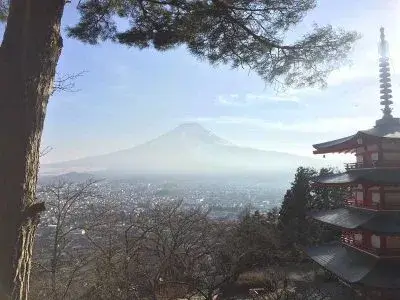
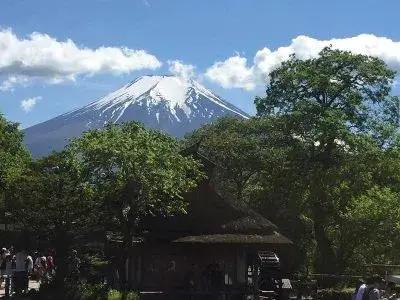
These 2 places are not next to each other but you can access both from Kawaguchiko. The photo of Mount Fuji with the pagoda taken at Arakurayama Sengen Park is often used on commercial posters of Japan (in spring cherry blossoms prettify the view). In Oshino Hakkai, there are 8 small ponds which are fed by the water from the melting snow of Mount Fuji and the water transparency is unprecedented.
From Ashino-ko Lake (Hakone)

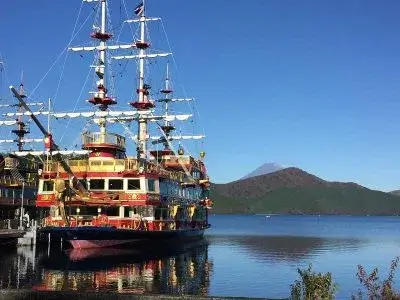
Ashino-ko Lake is located at 700m altitude in the region of Hakone. Hakone is easily accessible from Tokyo but we can see Mount Fuji quite rarely. But when we can see it, it’s just beautiful.
Mt Fuji From the Highway and Shinkansen
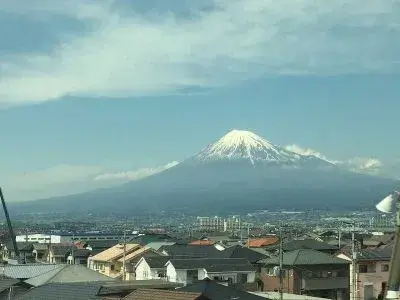

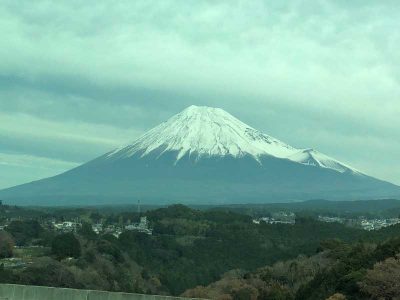
When you take the shinkansen between Kyoto and Tokyo, you can see Mount Fuji through the window of your train (from Tokyo, it’s on the right-hand side). On the way to Kawaguchiko, you can also see it through your window.
From Mount Fuji’s 5th station
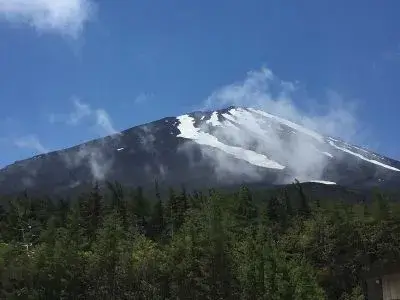
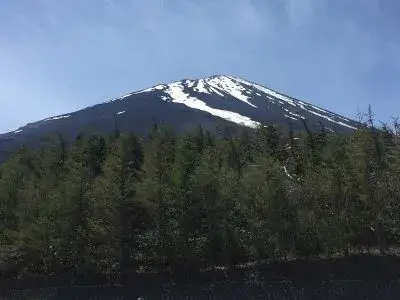
We can go by bus to the 5th station of Mount Fuji (the road is closed in winter for snow and even after it opens access is limited) and most hikers start their ascent from this 5th station located at 2305m altitude.
Mt Fuji From Mishima Skywalk
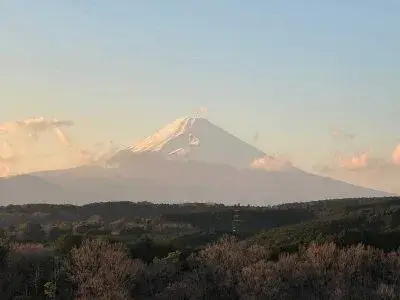
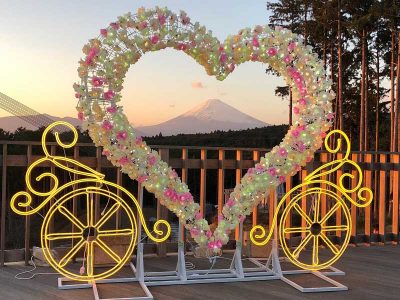
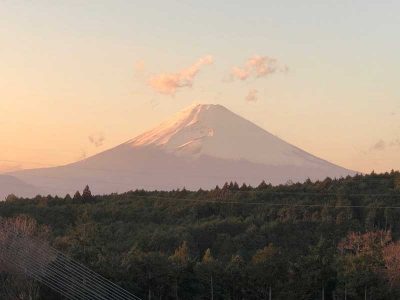
In Mishima, to take full advantage of the view of Mount Fuji, a 400m long overhead bridge was installed, called the Mishima Skywalk. We can observe the most recent Hoei Crater, created by the eruption of 1707.
From Nihondaira

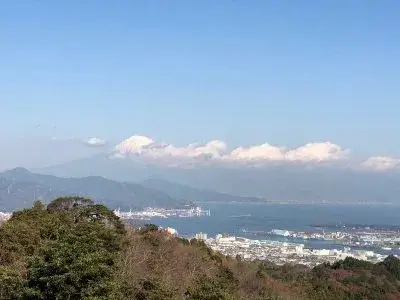
Nihon Daira is located in Shizuoka Prefecture and there is an observatory on Udoyama Mountain. From there, you have a beautiful view of Mount Fuji and Shimizu Bay. You can also visit the Kunozan Tosho-gu Shrine from here.
Mt Fuji From the Airplane
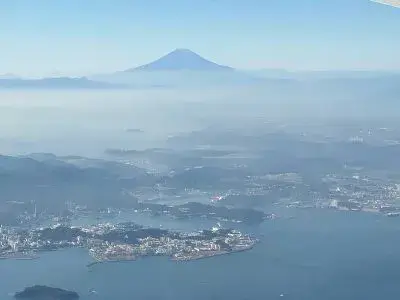
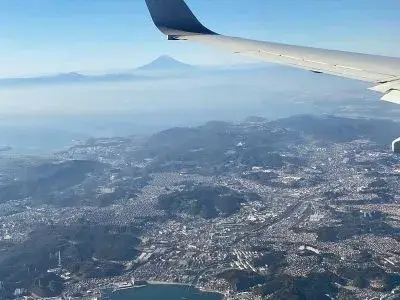
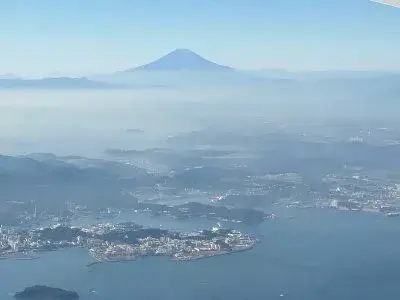
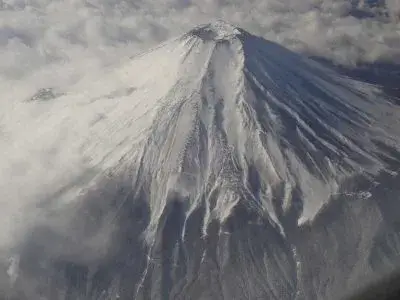
When we take the planes from Tokyo to the south of Japan, during good weather we can see Mount Fuji. From time to time only his head, but when the sky is clear, we can see up to his robe. The most spectacular view I had of Mount Fuji was when I could see its crater from the plane. This happened when I flew to Hiroshima from Tokyo. As the airway changed, it was the only time I could get that view.
So what are your favorite pictures? Thanks to my work as a guide, I had the opportunity to see it quite often. But still, every time I can see it, I am happy like foreign tourists who see it for the first time. It’s a magical mountain that always gives us the joy of being able to discover it.

Caede’s Viewing Strategy:
“For photographers, the ‘Diamond Fuji’ phenomenon—when the sun aligns perfectly with Fuji’s peak—occurs twice yearly in October/February from certain Tokyo locations. For classic views, the north side (Fuji Five Lakes) offers the most symmetrical perspective. Stay at least two days in the area as Fuji is famously shy—cloud cover can obscure the view unexpectedly. For more Japanese landscape photography, the Tateyama Kurobe Alpine Route offers spectacular mountain scenery.”
Practical Information
📍 Access Points:
- Fuji Subaru Line 5th Station: Main starting point for Yoshida Trail (2,305m)
- Gotemba 5th Station: Starting Gotemba Trail (1,440m)
- Fujinomiya 5th Station: Highest starting point (2,380m)
- Subashiri 5th Station: Eastern approach (2,000m)
⏰ Best Times:
- Climbing: July 10 – September 10 (avoid Obon week in mid-August)
- Viewing: October-March for clearest views
- Photography: Early morning year-round, autumn for foliage framing
💴 Costs:
- Climbing: ¥4,000 conservation donation requested on Yoshida Route
- Mountain Huts: ¥7,000-¥10,000 with two meals
- Transport: Bus from Tokyo ¥2,800-¥3,500 one way
- Equipment Rental: Full set ¥10,000-¥15,000 per person
Cultural and Artistic Legacy
Mount Fuji’s influence on Japanese culture is immeasurable:
Artistic Inspiration:
- Hokusai’s “Thirty-six Views of Mount Fuji”: Woodblock prints that influenced Western art
- Literary References: Countless poems and stories throughout Japanese history
- Modern Depictions: Continues to inspire contemporary artists and filmmakers
Religious Significance:
- Fujiko: Religious sect worshipping the mountain
- Pilgrimage Tradition: Centuries-old practice of climbing as spiritual act
- Shinto Beliefs: Considered dwelling place of kami (spirits)
Caede’s Cultural Perspective:
“Mount Fuji represents the perfect intersection of nature and culture in Japan. It’s not just a mountain—it’s a canvas upon which Japanese society has projected its spiritual beliefs, artistic visions, and national identity for over a millennium. This cultural layering makes every encounter with Fuji meaningful, whether you’re seeing it for the first time or the hundredth. To understand this relationship further, visit the Fujisan World Heritage Center or explore Hakone’s Open-Air Museum which features Fuji-inspired works.”

Seasonal Experiences
Spring (March-May):
- Cherry blossoms frame the mountain’s base
- Clear views after winter, before summer haze
- Beginning of climbing preparation season
Summer (June-August):
- Official climbing season (July-September)
- Lavender fields bloom at Fuji’s base
- Festivals celebrating the mountain
Autumn (September-November):
- Spectacular autumn foliage at Five Lakes
- Clear days return after summer humidity
- Post-climbing season tranquility
Winter (December-February):
- Snow-capped Fuji at its most majestic
- Fewest clouds, best photography conditions
- Ice formations at cave sites
Sustainable Tourism and Conservation
As a UNESCO site, Mount Fuji faces preservation challenges:
Environmental Concerns:
- Waste Management: Carrying out all trash is mandatory
- Erosion Control: Staying on marked trails protects fragile ecosystems
- Wildlife Protection: Respecting natural habitats around the mountain
Cultural Preservation:
- Respecting sacred sites and religious practices
- Supporting local communities through responsible tourism
- Following all guidelines to maintain the mountain’s integrity
Caede’s Responsible Travel Tips:
“Climbers should use the ‘Mount Fuji Toilet Cooperation System’—paying toilet fees supports waste management. Consider offsetting your carbon footprint, as the climb has environmental impact. Support local businesses in Fujiyoshida and the Five Lakes area rather than large chains. For more eco-tourism in Japan, consider the sustainable practices at Yakushima Island or community-based tourism in Okinawa’s remote islands.”
Alternative Experiences for Non-Climbers
Fuji Five Lakes Activities:
- Cycling around Lake Kawaguchiko
- Visiting the ice and wind caves at Lake Saiko
- Taking the Kachi Kachi Ropeway for aerial views
- Enjoying onsens with Fuji views
Cultural Experiences:
- Making traditional crafts in Fujiyoshida
- Visiting Fuji-themed museums and galleries
- Participating in seasonal festivals
- Learning about the mountain’s geology at visitor centers
Nearby Attractions:
- Fuji-Q Highland: Thrill rides with mountain views
- Shiraito Falls: Beautiful waterfalls at Fuji’s base
- Oshino Hakkai: Eight sacred ponds with spring water
- Gotemba Premium Outlets: Shopping with Fuji views
- Photography Guide
Photography Guide
Iconic Shots:
- Chureito Pagoda: Traditional architecture framing the mountain
- Lake Reflections: Morning calm on Kawaguchiko or Yamanakako
- Seasonal Framing: Cherry blossoms, autumn leaves, or snow scenes
- Climbing Shots: Star trails or sunrise from the summit
Technical Tips:
- Use telephoto lenses for compression effects
- Shoot during golden hour for warm lighting
- Include foreground interest for depth and scale
- Check weather and visibility forecasts regularly
Caede’s Final Reflection:
“Mount Fuji teaches us about perspective—both literally and metaphorically. From Tokyo, it appears as a distant, perfect cone. From its base, it reveals itself as a massive, complex landscape. From its summit, it offers a humbling view that puts human scale in cosmic perspective. This ability to shift meaning based on where and how you encounter it is what makes Fuji-san endlessly fascinating. It’s not just a mountain to be climbed or photographed; it’s a living symbol that continues to evolve in Japan’s consciousness while remaining rooted in ancient reverence. Whether you come to climb, to contemplate, or simply to witness one of Earth’s most beautiful natural formations, Mount Fuji offers what all great sacred sites provide—a moment of transcendence that lingers long after you’ve returned to everyday life.”