
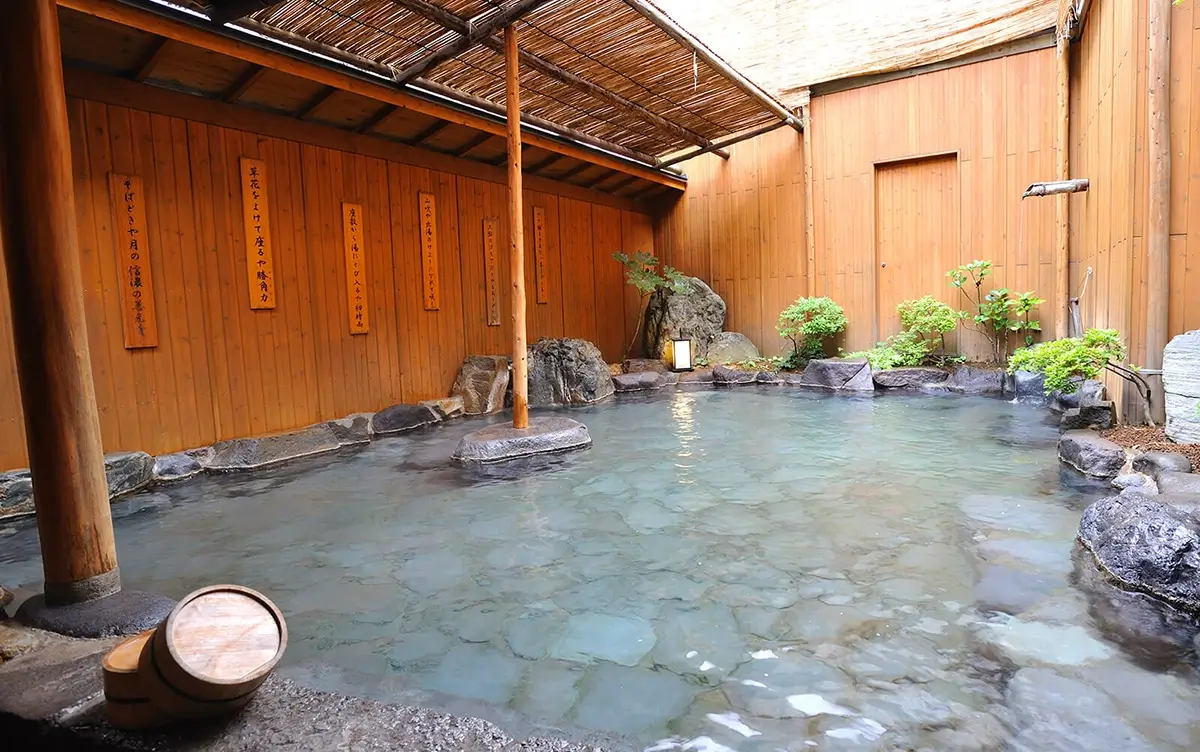
What is Shibu Onsen?
Tucked away in the Nagano mountains near Yudanaka, Shibu Onsen (渋温泉) is a charming and historic hot spring town known for its cobblestone streets, traditional ryokan inns, and nostalgic atmosphere. With over 1,300 years of history, this small onsen village continues to offer an authentic glimpse into Japan’s bathhouse culture.
Though it’s just a 10-minute walk from the more modern Yudanaka Onsen, Shibu feels like stepping into another era. Wooden buildings line the narrow alleys, and guests wearing yukata (cotton robes) and geta (wooden sandals) stroll between bathhouses, carrying their personal towels and room keys. Compared to Yudanaka, which caters to a wider range of travelers, Shibu Onsen feels more traditional, atmospheric, and local.
Its popularity isn’t just based on history—it’s also the closest lodging hub to the Jigokudani Monkey Park, where wild Japanese macaques famously bathe in outdoor hot springs. Many travelers choose to stay overnight in Shibu for convenient access to the park, but end up charmed by the retro townscape and its famed “Nine Bath Hopping” tradition.
Historical Bathhouses & the 9 Public Onsens
One of Shibu Onsen’s most beloved traditions is the “Kyu-to Meguri” (九湯めぐり)—a spiritual bath pilgrimage through nine historic public bathhouses, each said to offer a different blessing or healing property. Originally built for local residents, these baths are still maintained by the community and can only be accessed by overnight guests of local ryokan inns (with a special wooden key).
| Bathhouse | Believed Benefit |
|---|---|
| #1 Yokuyu 一番湯・初湯(よくゆ) | General luck and good fortune |
| #2 Sasa-no-yu 二番湯・笹の湯 | Intestinal health and digestion |
| #3 Wata-no-yu 三番湯・綿の湯 | Healing for cuts and wounds |
| #4 Take-no-yu 四番湯・竹の湯 | Back pain and joint relief |
| #5 Matsu-no-yu 五番湯・松の湯 | Skin conditions |
| #6 Mearai-no-yu 六番湯・目洗いの湯 | Eye health and clarity |
| #7 Nana-no-yu 七番湯・七繰の湯 | Recovery from illness |
| #8 Shinmeidō-no-yu 八番湯・神明滝の湯 | Safety and protection from misfortune |
| #9 Oyu 九番湯・大湯 | Overall blessing and spiritual purification |
Visitors are encouraged to collect red ink stamps (御朱印) from each bath. Once all nine are completed, you can visit the Shibutaka Yakushi Temple to pray for luck, health, and protection. This ritual has made Shibu Onsen not just a hot spring destination—but a sacred journey.
Tip: Bring your own towel and toiletries, as the public bathhouses are simple and do not provide amenities.
Local Belief: Complete all nine in one stay for “開運” (kaiun)—a spiritual unlocking of fortune and well-being.
Staying Overnight in Shibu Onsen
Ryokan Highlights
Kanaguya (金具屋)
One of the most iconic inns in Shibu Onsen, Kanaguya is said to have inspired the bathhouse design in Spirited Away. It features multiple indoor and outdoor baths, beautiful wooden interiors, and authentic kaiseki meals. The inn is a registered Tangible Cultural Property of Japan.
Shibu Hotel (渋ホテル)
A modern ryokan with traditional elements. The staff are known for warm hospitality and can assist non-Japanese guests with explanations about the onsen customs. Private baths and Western-style beds are available.
Guests staying in a ryokan receive a wooden key that grants access to the nine public bathhouses, allowing them to fully enjoy the Kyu-to Meguri pilgrimage.
A Full Cultural Experience
- Walk the cobblestone streets in yukata and geta sandals
- Enjoy a seasonal Japanese breakfast and dinner prepared in-house
- Unwind in the inn’s own hot spring bath before or after visiting the public ones
Tip: Many ryokan offer pickup service from Yudanaka Station, so check in advance when booking.
How to Get There
Shibu Onsen is located in Nagano Prefecture, in the Yamanouchi area—close to the more modern Yudanaka Onsen and the famous Jigokudani Monkey Park.
From Tokyo
- Train Route (Approx. 2.5–3 hours)
1. Take the Hokuriku Shinkansen from Tokyo Station to Nagano Station (about 90 minutes)
2. Transfer to the Nagano Dentetsu Line (Nagano Electric Railway) and take the local train to Yudanaka Station (about 50 minutes)
3. From Yudanaka Station, take a bus (10 min) or walk (20–25 min) to Shibu Onsen
By Car
- From Tokyo: about 3.5–4 hours via the Kan-Etsu Expressway and Joshin-Etsu Expressway
- Parking is available near the town, but note that some streets are narrow and limited to pedestrians.
From Kanazawa or Other Cities
- From Kanazawa: Take the Hokuriku Shinkansen to Nagano, then follow the same route as above.
- Direct buses may also be available from major cities depending on the season, but train + local transfer is the most reliable.
📍 Tip: Some ryokan offer shuttle services from Yudanaka Station—especially helpful in winter when the streets are snowy.
Guest Experience & Recommended Tours
“Wearing a yukata provided by the ryokan, I stepped into the narrow streets of Shibu Onsen just after sunset. The warm glow of the lanterns, the sound of geta on cobblestones, and the faint smell of sulfur created an atmosphere I’ll never forget. Locals nodded as I passed, and I felt like I had traveled a century back in time.”
“At each of the public baths, I pressed the red stamp onto my special towel—part of the ‘Nine Bath Pilgrimage.’ Some of the baths were so small they felt like secret hideaways, others had walls blackened by decades of steam. After the final one, I visited the local temple and said a quiet wish for good luck.”
Recommended Tours
Q&A – Shibu Onsen Travel Tips
Is Shibu Onsen worth visiting?
Absolutely. Shibu Onsen offers a unique blend of traditional atmosphere, cultural charm, and historical public baths. If you’re looking for a quiet, authentic onsen town that still feels alive and welcoming, it’s one of the best in Japan.
Can you use the public bathhouses without staying overnight?
Most of the nine public bathhouses (soto-yu) are only available to guests staying at local ryokan. However, Bath No. 9 (Oyu) is open to day visitors for a small fee. It’s worth visiting even if you’re not spending the night.
What should I bring for the 9-bath pilgrimage?
If you’re staying overnight, your ryokan will usually give you a special towel for collecting stamps at each bath. Bring a small hand towel, modest bathing attire, and be ready to walk between the baths in your yukata and geta.
How long does it take to visit all 9 baths?
Most people take 2–3 hours, depending on pace and how long they soak. Some travelers spread the experience over an afternoon and the next morning. It’s not a race—take your time and enjoy the journey.
Is Shibu Onsen good to visit in winter?
Yes—winter is one of the most magical times to visit. Snowfall transforms the town into a postcard-perfect setting, and the hot baths feel even more soothing in the cold air. It’s also the perfect season to pair with a visit to Jigokudani Monkey Park.
Visitor Info – Shibu Onsen
Location
Shibu Onsen, Yamanouchi Town, Nagano Prefecture, Japan
(Approximately 10 minutes from Yudanaka Station by bus or on foot)
Bathhouse Hours
- Bath No. 9 (Oyu): 6:00 AM – 10:00 PM
- Other Soto-yu (1–8): Typically open from 6:00 AM – 10:00 PM (varies by ryokan)
Admission
- Free for ryokan guests (with room key or stamp towel)
- Bath No. 9: ¥500 (non-staying visitors)
Important Notes
- Only overnight guests at local ryokan receive keys to access the 8 smaller public baths
- Each bath has its own history and charm—some are hotter, deeper, or more rustic than others
- Towels, soap, and shampoo are not provided—bring your own or purchase at shops nearby
Official Site
Last updated: December 2025