
Between Tokushima’s Naruto Peninsula and Awaji Island in the Seto Inland Sea, one of nature’s most dramatic performances unfolds daily—the majestic Naruto Whirlpools (Naruto no Uzushio). These powerful tidal phenomena, reaching up to 20 meters in diameter with speeds of 20 km/h, represent one of Japan’s most spectacular natural wonders and rank among the world’s three largest tidal whirlpools alongside Italy’s Messina Strait and Canada’s Seymour Narrows.
The Science Behind the Spectacle
The Naruto Whirlpools are born from a perfect convergence of geographical and astronomical factors that transform the Seto Inland Sea into a natural theater of hydraulic power. The phenomenon occurs in the Naruto Strait, a narrow channel connecting the Pacific Ocean and the Seto Inland Sea, where extreme tidal differences—up to 1.5 meters between high and low tide—create massive water pressure differentials.
Key Factors Creating the Whirlpools:
- Tidal Range: Some of Japan’s largest tidal variations
- Channel Topography: V-shaped sea floor accelerating water flow
- Water Volume: Approximately 1.4 billion tons passing through daily
- Current Speed: Reaching 12-13 knots during spring tides
Caede’s Scientific Insight:
“What makes Naruto particularly special is the predictability of the spectacle. Unlike many natural phenomena dependent on weather or seasons, the whirlpools follow the moon’s rhythm. During spring tides (around full and new moons), the water dance reaches its most dramatic intensity, while neap tides offer a gentler performance. This reliability makes planning your visit wonderfully straightforward. For more of Japan’s dramatic coastal phenomena, consider the tidal pools of Miyajima’s Itsukushima Shrine or the rock formations of Shirahama’s Sandanbeki Cliffs.”

Experiencing the Whirlpools: Multiple Perspectives
1. Cruise Experience: Dancing with the Currents
Several cruise operators offer intimate encounters with the whirlpools:

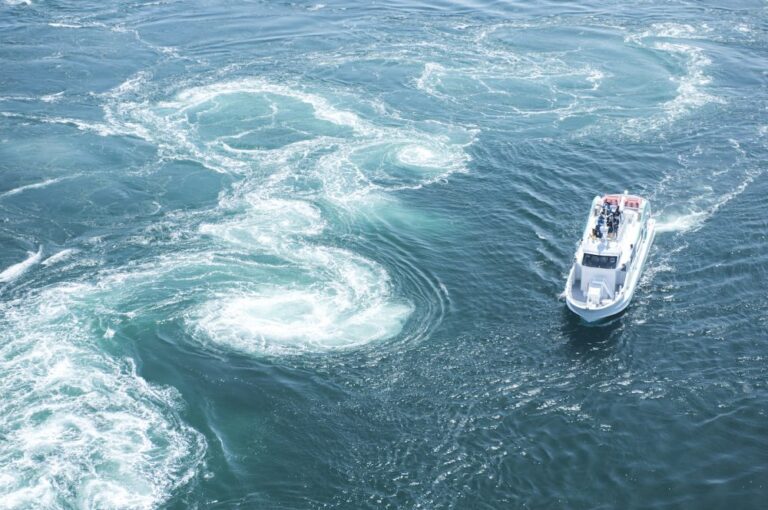
Special timing: Cruises scheduled around peak tidal flow times
Uzushio Kisen: Large observation boats with indoor and outdoor decks
Wonder Naruto: Smaller boats getting closer to the action

Caede’s Cruise Recommendation:
“For the most thrilling experience, choose a smaller boat during spring tide—you’ll feel the water’s power more intimately. Morning cruises typically offer calmer sea conditions. Don’t just watch—listen! The roar of the whirlpools is as impressive as their visual spectacle. If you’re prone to seasickness, opt for larger vessels or consider viewing from the Naruto Bridge instead. For other unique Japanese boat experiences, try the jikkokubune canal boats of Yanagawa or Matsushima’s scenic bay cruises.”
2. Naruto Bridge Walkway: A Bird’s-Eye View
The Naruto Bridge features a unique observational walkway 45 meters above sea level, offering panoramic views of the whirlpools and surrounding coastline.
3. Uzu-no-Michi Walkway: At Water Level
A 450-meter pedestrian walkway beneath the bridge allows visitors to observe the whirlpools from multiple angles at closer proximity.
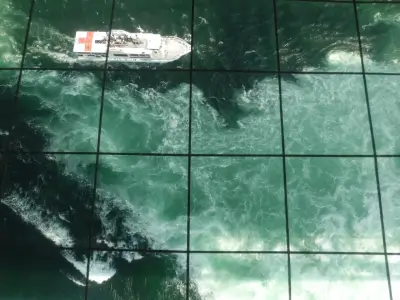
The entrance fee is 400 yen for adults and 100 yen for junior high school and elementary school students. They are open from 9:00 to 17:00 (8:00 to 17:00 in the summer).
Frequently Asked Questions
Q: When is the best time to see the whirlpools?
A: Approximately 1.5-2 hours before and after high tide during spring tide periods. Check the official tide timetable, as optimal viewing times shift daily.
Q: How large do the whirlpools get?
A: Typically 10-20 meters in diameter during spring tides, occasionally reaching 30 meters under perfect conditions. Their size and number vary with tidal forces.
Q: Is the experience suitable for children and elderly visitors?
A: Yes, viewing from the bridge walkways is accessible to all. Boat cruises may be challenging for those with mobility issues or sensitivity to boat motion.
Q: How much time should I allocate for a visit?
A: Minimum 2-3 hours to account for tide timing and transportation. A half-day allows for a more relaxed experience including nearby attractions.
Q: Can I visit year-round?
A: Yes, but winter months (December-February) offer the largest whirlpools due to greater tidal ranges. However, sea conditions can be rougher.
The Cultural Significance of Uzushio
Beyond their natural spectacle, the Naruto Whirlpools hold deep cultural meaning:
Historical Navigation Hazard:
For centuries, the strait posed significant danger to ships, inspiring both fear and reverence among sailors.
Literary and Artistic Inspiration:
Featured in classical Japanese literature including the Manyoshu poetry anthology and various ukiyo-e prints.
Modern Cultural Icon:
Served as namesake for the popular anime “Naruto,” bringing international attention to this natural wonder.
Spiritual Associations:
Traditional beliefs viewed the whirlpools as manifestations of water deities or dragon spirits.
Caede’s Cultural Perspective:
“The whirlpools represent Japan’s complex relationship with nature—both as something to be respected for its power and appreciated for its beauty. This duality is evident throughout Japanese culture, from the careful containment of nature in Japanese gardens to the celebration of natural forces in festivals. Understanding this cultural context enriches the experience beyond mere visual spectacle.”

Practical Visitor Information
📍 Access:
- By Train: JR Naruto Line to Naruto Station, then bus to viewing areas (15 minutes)
- By Car: Parking available at both bridge and cruise facilities
- From Tokushima City: Approximately 40 minutes by train or car
- From Osaka/Kobe: 2.5-3 hours including Awaji Island crossing
⏰ Optimal Viewing Times:
- Peak Seasons: Winter months for largest whirlpools
- Daily Timing: Varies with tide—check official timetable
- Best Conditions: Clear weather with moderate winds
💴 Admission and Costs:
- Bridge Walkway: ¥510 adults, ¥250 children
- Uzu-no-Michi: ¥300 adults, ¥150 children
- Cruise Boats: ¥1,800-¥2,500 per person
- Combination Tickets: Available for multiple attractions
Nearby Attractions
Naruto Park:
Beautiful coastal park with walking trails and observation points offering alternative whirlpool views.
Otsuka Museum of Art:
Features ceramic reproductions of famous Western artworks, including a full-scale replica of Michelangelo’s Sistine Chapel ceiling.
Ryozen-ji Temple:
First temple of the Shikoku 88 Temple Pilgrimage, offering spiritual context to the natural wonder.
Awaji Island:
Connected via Naruto Bridge, offering onion farms, puppet theater, and additional coastal scenery.

Caede’s Area Exploration Suggestion:
“Combine your whirlpool visit with the first few temples of the Shikoku 88 Temple Pilgrimage. Starting at Ryozen-ji provides cultural depth to your natural wonder experience. Alternatively, explore Awaji Island’s agricultural and artistic attractions. For more Shikoku highlights, visit Takamatsu’s Ritsurin Garden or Kochi’s historic castle.”
Photography Tips
Equipment Recommendations:
- Polarizing filter to reduce water surface glare
- Telephoto lens for capturing distant whirlpool details
- Sturdy tripod for bridge walkway photography
- Waterproof gear for boat-based photography
Optimal Shooting Conditions:
- Lighting: Side lighting during morning or late afternoon
- Weather: Partly cloudy days provide dramatic skies
- Tide State: Peak flow for most dramatic formations
- Safety First: Secure equipment on boats and respect barriers
Seasonal Variations
Winter (December-February):
Largest whirlpools due to maximum tidal range, but cooler temperatures and potential rough seas.
Spring (March-May):
Comfortable viewing conditions with blooming coastal flowers adding color to photographs.
Summer (June-August):
Smaller whirlpools but pleasant sea conditions for extended viewing. Can be hot and humid.
Autumn (September-November):
Clear skies and comfortable temperatures, with autumn foliage on surrounding hills.
Educational Opportunities
Uzushio Science Museum:
Interactive exhibits explaining the physics and geography behind the whirlpool phenomenon.
Tidal Power Research:
Learn about ongoing studies harnessing tidal energy from the strait’s powerful currents.
Marine Biology:
Information about unique ecosystems created by the nutrient-rich upwelling waters.

Caede’s Learning Recommendation:
“Visit the science exhibits before seeing the whirlpools—understanding the ‘why’ behind the spectacle significantly enhances appreciation. The interplay between lunar gravity, earth rotation, and unique geography creates a natural laboratory visible to all. For more educational natural sites in Japan, explore the volcanic landscapes of Mount Aso.”

Caede’s Final Reflection:
“The Naruto Whirlpools offer something increasingly rare in our modern world—an opportunity to witness raw, untamed natural power on a grand scale. In an era where we often control or mitigate nature’s forces, standing before these swirling giants reminds us of the earth’s fundamental energies that operate on scales far beyond human intervention. More than just a tourist attraction, the whirlpools provide a humbling lesson in planetary mechanics, a beautiful demonstration of cosmic forces made visible through water, and a poignant reminder of nature’s ability to create spectacular beauty through sheer physical necessity. Whether you come as a nature enthusiast, photography seeker, science curious, or simply someone who appreciates awe-inspiring spectacle, the Naruto Whirlpools promise an experience that will swirl in your memory long after the waters have calmed.”