
What is Nagoya Castle?
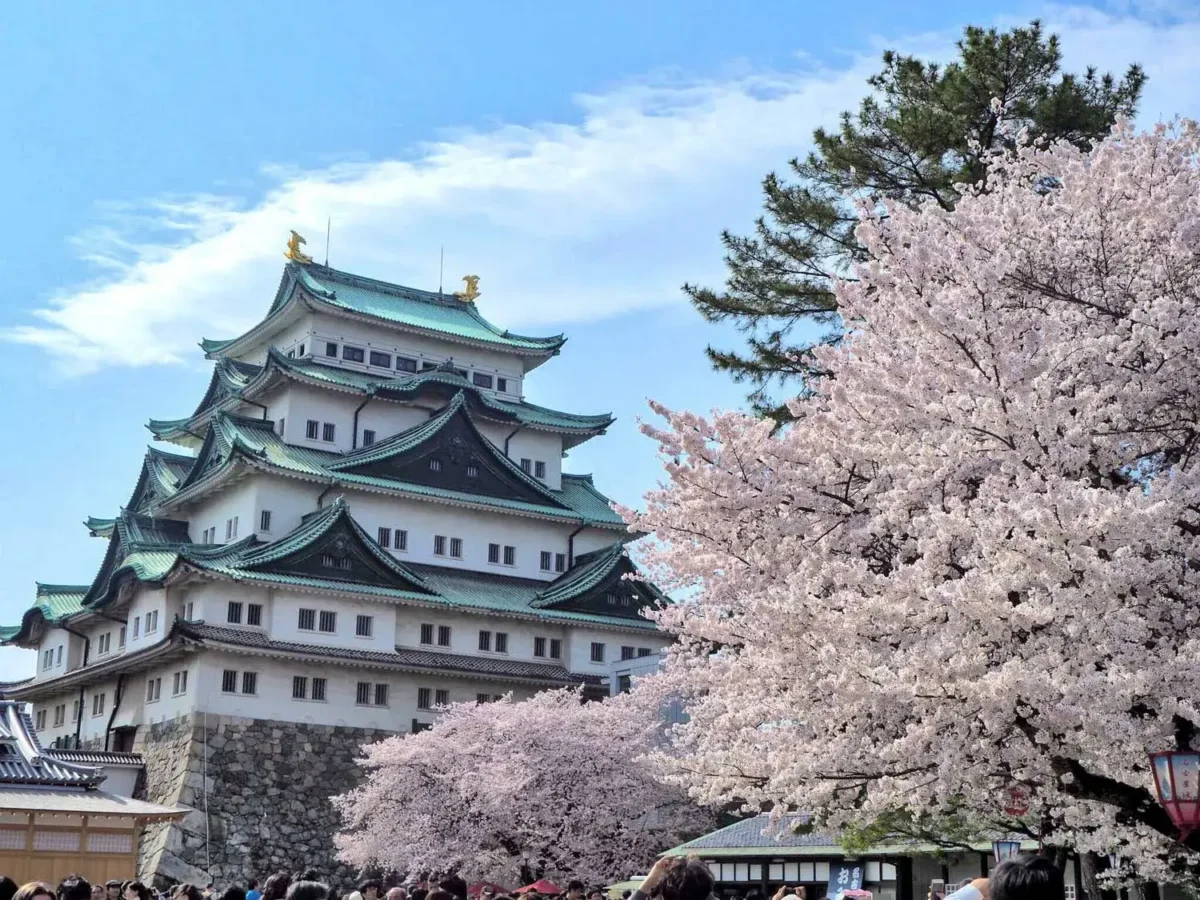
Nagoya Castle is one of Japan’s most iconic castles, located in the heart of Nagoya City, Aichi Prefecture. Originally built in 1612 by Tokugawa Ieyasu—the founder of the Tokugawa Shogunate—it served as a strategic stronghold to secure control over central Japan. The castle became the seat of the Owari branch of the Tokugawa family, one of the most powerful in the Edo period.
The castle is instantly recognizable for its golden shachihoko—mythical tiger-headed fish—adorning the roof of the main keep (tenshu). These ornamental creatures not only symbolize protection from fire but have also become enduring symbols of Nagoya itself.
Although the original main tower was destroyed during WWII air raids, it was rebuilt in 1959 using concrete. Today, the castle complex includes the magnificently restored Honmaru Palace, known for its gold-trimmed fusuma paintings, intricate woodwork, and traditional Japanese architecture.
History and Cultural Significance
Nagoya Castle was commissioned by Tokugawa Ieyasu in 1610 to solidify his control over the central region of Japan and guard the road between Kyoto and Edo (modern-day Tokyo). The construction was one of the largest architectural projects of the early Edo period and involved contributions from several feudal lords (daimyo), who were required to donate labor and materials—a tactic also used to weaken potential rivals.
The main keep (tenshu) was one of the largest of its kind and featured sophisticated defenses, stone walls, and a moat system that reflected the strategic priorities of the Tokugawa regime.
During the Meiji period, many castles in Japan were destroyed or repurposed, but Nagoya Castle survived until 1945, when it was heavily bombed in World War II. Most of the structures burned down, including the iconic tenshu. Fortunately, many artifacts and historical documents had already been removed for safekeeping.
In 1959, the main tower was reconstructed using concrete and modern materials. In recent years, however, the city of Nagoya has launched a long-term project to rebuild the castle using traditional wooden construction methods, aiming to restore its Edo-period authenticity.
The adjacent Honmaru Palace, formerly the residence and administrative center for the ruling family, was meticulously reconstructed using traditional techniques and materials. It reopened fully to the public in 2018 and now stands as a highlight of any visit.
Today, Nagoya Castle is both a symbol of local pride and a window into Japan’s feudal past, offering educational exhibits, beautiful gardens, and seasonal events such as cherry blossom festivals.
What to See at Nagoya Castle
Main Keep (Tenshu)
Although the current main tower is a concrete reconstruction built in 1959, it still dominates the skyline with its grand, five-tiered design. Visitors can walk around its base and admire the famous golden shachihoko—mythical tiger-headed fish ornaments perched on the rooftop. These are symbols of protection against fire and are one of Nagoya’s most recognizable icons.
⚠️ Note: As of 2025, entry to the main keep is closed due to ongoing reconstruction plans to rebuild it in traditional wooden form. However, you can still explore the surrounding grounds and view it from multiple angles.
Honmaru Palace
This stunning wooden reconstruction of the original palace opened fully in 2018 and is a must-see highlight. Inside, you’ll find:
• Lavishly decorated sliding doors (fusuma) with gold-leaf paintings of tigers, pine trees, and birds
• Tatami-mat rooms once used for official audiences, strategy meetings, and everyday life
• Authentic Edo-period architecture with historically accurate carpentry techniques
The experience gives you a vivid sense of life during the Tokugawa era.
Ninomaru Garden
A tranquil Japanese garden located on the eastern side of the castle grounds. This landscape garden features:
• Meandering paths
• Carefully pruned pines
• Seasonal flowers and koi ponds
In spring, it becomes a popular cherry blossom viewing spot, with over 1,000 sakura trees creating a picturesque backdrop.
Stone Walls and Moats
The massive stone walls, constructed using the no-mortar (dry-stone) technique, are considered engineering marvels of their time. They curve gently outward to resist collapse—part of the castle’s defense strategy. The double moats further enhanced protection and add to the scenic beauty.
How to Get to Nagoya Castle
Location
Nagoya Castle is centrally located in Naka Ward, Nagoya City, making it easy to access by public transport or on foot from nearby areas.
Address
1-1 Honmaru, Naka Ward, Nagoya, Aichi 460-0031, Japan
By Subway
• From Nagoya Station:
Take the Sakuradori Line to Hisaya-odori Station, transfer to the Meijo Line, and get off at Shiyakusho Station (City Hall).
Use Exit 7 — the castle is just a 5-minute walk from there.
• From Sakae (downtown Nagoya):
Take the Meijo Line directly to Shiyakusho Station.
By Bus
• From Nagoya Station, city buses and sightseeing loop buses (like Me~guru) go directly to the castle.
Get off at the Nagoya Castle stop.
On Foot or by Bike
Nagoya Castle is within walking distance (about 30 minutes) or a short bike ride from major city hubs like Nagoya Station and Sakae.
Bike rentals are available nearby.
Tip: Download a local transit app (like NAVITIME or Google Maps) for real-time directions.
Guest Experience & Recommended Tours
“The golden shachihoko on the roof was more impressive than I expected! I joined a guided tour and learned how Nagoya Castle was one of the most important castles during the Edo period. The reconstructed Honmaru Palace was stunning—especially the gold-leaf screens inside.”
“I visited during the cherry blossom season, and the entire park was glowing with pink. It was one of the most peaceful yet impressive places I visited in Japan. The contrast between the sturdy stone walls and delicate blossoms was unforgettable.”
Recommended Tours
・10-Day Great Japan Private Tour Package | Cherry Blossoms, Anime & Theme Park Tour
・10-Day Best of Japan Small Group Tour Package | Anime & Theme Park Wonderland
Q&A – Nagoya Castle Travel Tips
What is special about Nagoya Castle?
Nagoya Castle is known for its massive golden shachihoko (mythical tiger-fish roof ornaments), imposing stone walls, and its role as a Tokugawa-era stronghold. It was one of the most important castles of the Edo period and showcases classic samurai architecture blended with artistic elegance.
Why can’t you enter Nagoya Castle?
As of 2025, the main keep is closed to the public due to long-term earthquake resistance renovation work. However, visitors can still explore the Honmaru Palace, castle gardens, and outer structures, which are beautifully restored.
Is it worth going to Nagoya Castle?
Yes—especially for those interested in samurai history, feudal Japan, and Japanese architecture. The surrounding Honmaru Palace is an impressive reconstruction filled with stunning gold-leaf screens and historical details. Plus, the castle grounds are popular in cherry blossom season.
Why is Nagoya famous?
Nagoya is famous for its automotive industry (Toyota), historic sites like Nagoya Castle, and local cuisine such as miso katsu, hitsumabushi (eel over rice), and kishimen noodles. It’s a vibrant city that blends tradition and innovation.
Visitor Info – Nagoya Castle
Opening Hours
• 9:00 AM – 4:30 PM (last entry at 4:00 PM)
• Closed: December 29–January 1
Admission
• General (Adults): ¥500
• Junior High School students and younger: Free
• Groups (over 30): ¥400 per person
• Honmaru Palace is included in the admission
Language Support
• English signage available on-site
• Guided tours in English may be available by reservation
• Audio guides available (limited quantity)
Accessibility
• Barrier-free paths and ramps available in most areas
• Elevators inside Honmaru Palace
• Accessible restrooms on-site
Official Website
Last updated: December 2025