
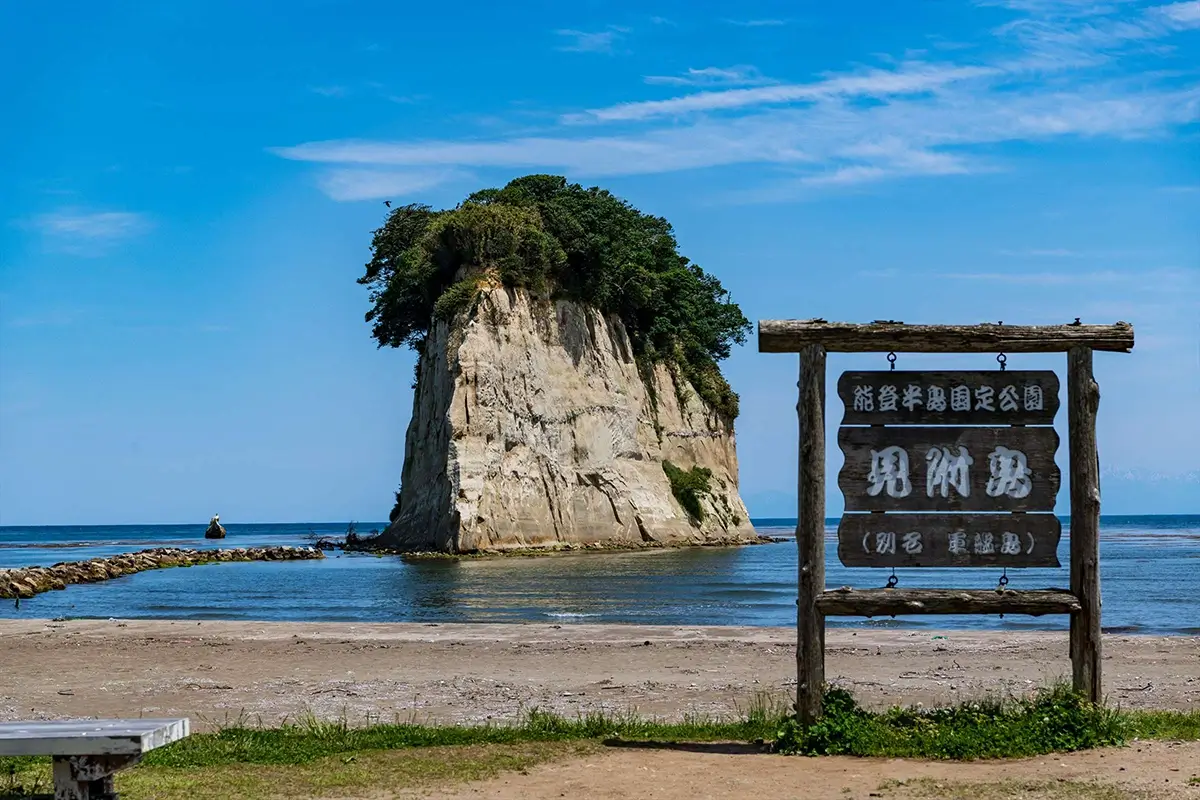
What is Mitsukejima?
Mitsukejima (見附島), often called “Battleship Island”, is a solitary rock formation standing roughly 30 meters high off the coast of Suzu City in Ishikawa Prefecture’s Noto Peninsula. From a distance, its long, flat shape resembles a warship emerging from the sea, which gives it the nickname Gunkanjima.
Unlike the better-known Gunkanjima in Nagasaki, Mitsukejima is entirely natural. It consists mostly of diatomaceous earth, a sedimentary rock formed from microscopic plankton. This soft, porous stone has long been used in traditional shichirin (clay stoves) and local crafts, connecting the rock to the livelihoods of Suzu’s residents.
Set against the Sea of Japan’s ever-changing blues and grays, the rock has become one of the most photogenic coastal landmarks in the Hokuriku region.
Legends & Historical Background
Mitsukejima’s name literally means “Found Island.” According to local legend, the monk Kūkai (Kōbō-Daishi) discovered it on his journey from Sado Island to mainland Japan in the early 9th century. The tale says that upon spotting the rock from his boat, he exclaimed, “There it is!” (Mitsuketa!)—and the name stuck.
While the island itself is uninhabited and has no formal shrine or structure, it has spiritual significance. Over the centuries, it became a visual symbol of orientation, discovery, and guidance—common themes in Buddhist pilgrimage routes throughout Japan.
The rock is also part of the Noto Hantō Quasi-National Park, a protected natural area that covers most of the peninsula. As Suzu developed as a port town during the Edo period, Mitsukejima remained a reference point for sailors navigating the rugged northern coast.
Best Time to Visit
Mitsukejima is worth visiting throughout the year, but certain seasons offer unique atmospheres:
- Spring (April–May): Wildflowers bloom in the coastal area, and the weather is pleasant for long walks along the shore.
- Summer (June–August): Clear skies offer dramatic photo ops and the best views of the Ninfia with LOVE installation.
- Autumn (October–November): Crisp air and fewer tourists make for a peaceful experience.
- Winter (December–February): Snow may dust the coastline, creating a stark contrast with the dark sea and rock.
Best Light: Visit at sunrise or sunset for incredible photos with glowing skies and long shadows. The island silhouette becomes particularly striking during golden hour.
Tip: Visit during low tide for a chance to walk out on the rocky shore closer to the island—just wear sturdy shoes!
What to Expect on Your Visit
Visiting Mitsukejima offers a blend of natural beauty and playful charm:
- Dramatic Coastal Rock: Towering 30m above the sea, the rock stands alone against the wide ocean horizon. Its flat, ship-like shape makes it easy to photograph from many angles.
- Ninfia with LOVE Pokémon Monument: In 2025, a vibrant Pokémon With You art piece featuring Ninfia (Sylveon) was added near the shore. This pastel-colored sculpture promotes local revitalization and invites families and anime fans alike.
- Photo Spots: There are walking paths, small shrines, and raised viewpoints for photography. Stone monuments and placards explain the rock’s nickname and history.
- Low Tide Access: At certain times, a natural stone path appears at the base of the beach, letting you approach the rock up close.
Nearby, you’ll find coastal cafes, food stands (in peak season), and vending machines. Public toilets are available near the parking lot.
How to Get There
Mitsukejima is located in the Takadate district of Suzu City, at the northern edge of the Noto Peninsula.
🚗 By Car
- From Wajima: ~40 minutes
- From Kanazawa: ~2.5 hours via Noto Satoyama Kaido
- Free parking available near the coastline
🚌 By Public Transport
- Noto Railway to Anamizu Station, then local bus to Suzu
- Local buses connect Suzu center to Mitsukejima (check seasonal timetables)
Due to infrequent buses, most visitors opt to rent a car or join a guided tour that includes coastal highlights like Wajima, Shiroyone Senmaida, and Suzu’s art installations.
Guest Experience & Recommended Tours
“We arrived just before sunset, and it was magical—the island looked like it was floating on golden water. The Pokémon statue was a surprise bonus! It made the moment feel both nostalgic and fun.”
“This was one of our favorite spots in the Noto Peninsula. After exploring the morning market in Wajima and visiting the rice terraces, ending the day with Mitsukejima felt peaceful and cinematic.”
Recommended Tours
Q&A – Travel Tips about Mitsukejima
What is Mitsukejima known for?
Mitsukejima is known for its iconic rock formation off the coast of Suzu City in Ishikawa Prefecture. Its ship-like silhouette and local legends—especially the story of Kūkai discovering it—make it a symbolic and scenic destination.
Can you walk to Mitsukejima?
You cannot walk onto the island itself, but during low tide, you can approach much closer via the rocky shoreline. Sturdy shoes are recommended if you want to explore near the base.
Is Mitsukejima part of a national park?
Yes. Mitsukejima is part of the Noto Hantō Quasi-National Park, which protects the natural landscapes and ecosystems of the Noto Peninsula.
How much time should I spend at Mitsukejima?
Most travelers spend 30–60 minutes here, depending on the light and photo opportunities. Many combine it with nearby stops like Shiroyone Senmaida or Wajima Morning Market.
What is the Pokémon statue near Mitsukejima?
A statue of Sylveon (Ninfia) from Pokémon was installed in 2025 as part of the “Pokémon Local Acts” revitalization project. It’s located near the beach and adds a colorful pop culture element to the area.
Visitor Info
Location
Mitsukejima, Takadate-machi, Suzu City, Ishikawa Prefecture, Japan(石川県珠洲市高屋町 見附島)
Admission
Free (Open 24/7)
Parking & Access
Free parking lot near beach / toilets available / vending machines nearby
Official Suzu Tourism Site
Last updated: December 2025