
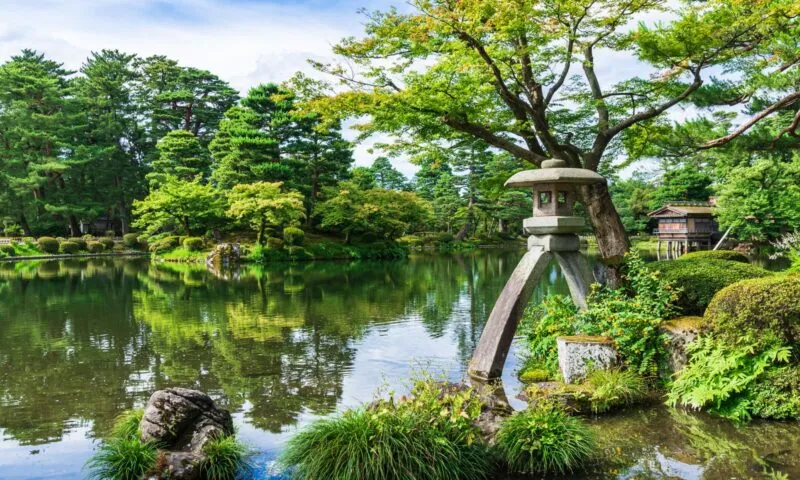
What is Kenrokuen Garden?
Kenrokuen Garden (兼六園), located in Kanazawa, Ishikawa Prefecture, is one of Japan’s Three Great Gardens, alongside Kairakuen in Mito and Korakuen in Okayama. The name “Kenrokuen” means “Garden of Six Attributes,” referring to the six essential qualities of a perfect garden: spaciousness, seclusion, artifice, antiquity, water features, and panoramic views.
Originally developed in the 17th century as the outer garden of Kanazawa Castle, Kenrokuen was built and refined over generations by the Maeda Clan, one of the most powerful feudal families during the Edo period. It was opened to the public in 1874 and has remained a beloved destination ever since.
Its beauty shifts with the seasons—cherry blossoms in spring, vibrant maples in autumn, and snowy yukitsuri ropes protecting trees in winter make it a favorite among both photographers and cultural travelers.
History of Kenrokuen Garden
Kenrokuen Garden was originally built in the 17th century by the Maeda clan, who ruled the Kaga Domain (modern-day Ishikawa Prefecture). The garden was developed over generations as part of the outer garden of Kanazawa Castle, with the earliest section completed in 1676.
The name “Kenrokuen” (兼六園) means “Garden of the Six Attributes,” referring to the six characteristics of an ideal landscape garden, according to Chinese tradition: spaciousness, seclusion, artificiality, antiquity, abundant water, and broad views.
During the Edo period, the garden was used exclusively by the ruling family. In 1874, after the Meiji Restoration, Kenrokuen was opened to the public and has remained a beloved landmark ever since. Today, it is one of Japan’s Three Great Gardens, along with Kairakuen in Mito and Korakuen in Okayama.
Garden Highlights
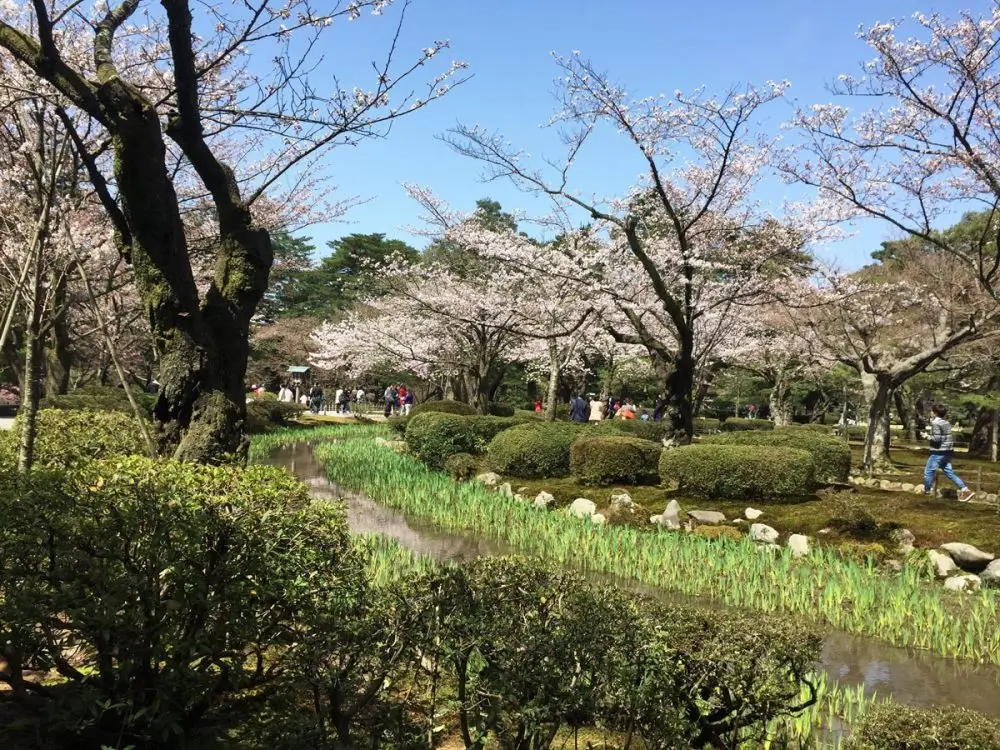
Kenrokuen is a strolling-style landscape garden designed to offer beautiful scenery in all four seasons. The highlights include:
- Kasumigaike Pond A large, central pond that reflects the surrounding trees and sky. It features an island with a small shrine and is home to koi fish and wild birds.
- Kotojitoro Lantern (琴柱灯籠) Perhaps the most iconic symbol of Kenrokuen, this two-legged stone lantern stands gracefully by the edge of Kasumigaike Pond. It’s often featured in photographs of the garden.
- Yugao-tei Tea House The oldest structure in the garden, dating back to 1774. Visitors can enjoy a traditional tea ceremony here while overlooking the serene garden.
- Karasaki Pine (唐崎松) A massive pine tree grown from seed brought from Lake Biwa’s Karasaki. Its carefully pruned branches extend outward in dramatic, low arcs supported by wooden poles.
- Shigure-tei Pavilion This small, elevated structure offers views across the garden and is especially lovely during the rainy season or early morning mist.
- Seasonal Landscapes
- Spring: Plum and cherry blossoms
- Summer: Lush greenery and irises
- Autumn: Maple leaves in fiery red and orange
- Winter: Snow-covered trees supported by yukitsuri ropes—an iconic Kanazawa winter image
How to Get There
- From Kanazawa Station: • Bus: Take the Kanazawa Loop Bus (left or right loop), get off at “Kenrokuen-shita” stop (approx. 15–20 minutes). • Taxi: About 10–15 minutes from the station.
- On Foot: A 25–30 minute walk from Kanazawa Station through the scenic city center.
Guest Experience & Recommended Tours
“I visited during early April, and the cherry blossoms were in full bloom. The Kotojitoro Lantern framed against the pink trees was breathtaking. The paths were quiet in the morning, and I had tea at Yugao-tei while watching petals fall into the stream—unforgettable.”
“As a landscape design student, I appreciated the attention to detail—every stone, stream, and slope felt intentional. I booked a guided tour and learned how each part reflects traditional garden principles. Highly recommend for culture lovers!”
Recommended Tours
Q&A – Kenrokuen Travel Tips
What does Kenrokuen mean?
The name translates to “Garden of Six Attributes,” referencing the ideal elements of a classical Chinese garden—spaciousness, seclusion, artifice, antiquity, water, and scenic views.
How long does it take to see the Kenrokuen Garden?
Most visitors spend 60 to 90 minutes exploring, though photographers and garden lovers may stay longer to enjoy seasonal views and teahouses.
Why is Kenrokuen Garden famous?
It’s considered one of Japan’s most beautiful gardens, renowned for its historical design, seasonal landscapes, and well-preserved Edo-period aesthetics.
How do I get from Kanazawa Station to Kenrokuen?
Take the Kanazawa Loop Bus to “Kenrokuen-shita” stop or a taxi (approx. 15 minutes). Walking is also possible in about 25 minutes.
Visitor Info
Location
Kenrokuen Garden (兼六園)
1-1 Marunouchi, Kanazawa, Ishikawa 920-0937, Japan
Opening Hours
- March 1 – October 15: 7:00 AM – 6:00 PM
- October 16 – End of February: 8:00 AM – 5:00 PM
Admission
- Adults: ¥320
- Children (6–17): ¥100
- Free for preschoolers
Official Website
https://www.pref.ishikawa.jp/siro-niwa/kenrokuen/e/index.html
Last updated: December 2025