
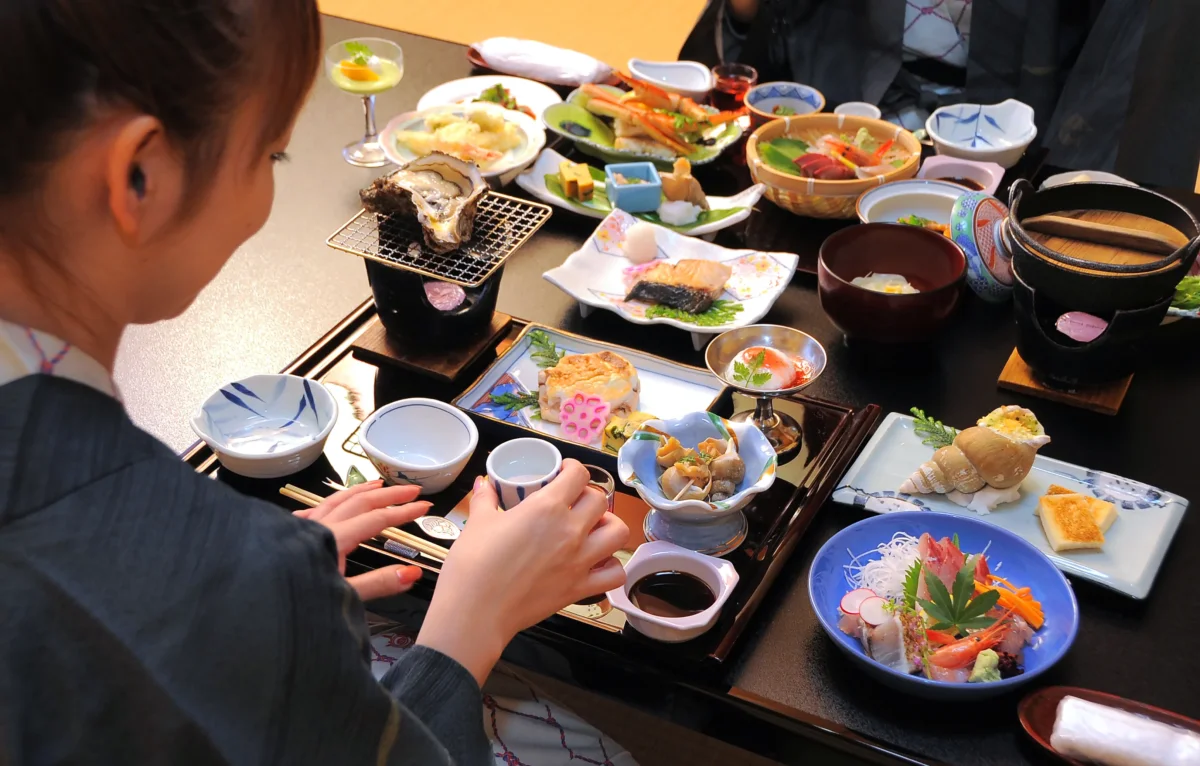
What is Kaiseki?
Kaiseki (懐石料理) is Japan’s most refined form of dining—an elegant, multi-course meal that celebrates seasonal ingredients, aesthetic presentation, and deep cultural tradition. Originating from Zen Buddhist tea ceremony meals, kaiseki evolved into an art form of culinary storytelling, where each dish is carefully designed to highlight nature, harmony, and balance.
Unlike casual Japanese meals or all-you-can-eat styles, a kaiseki dinner follows a fixed course structure, with small, beautifully arranged plates served in a thoughtful order. Every detail—from the dishware to the garnish—is meant to reflect the season, setting, and spirit of the moment.
→Want to enjoy kaiseki dining, cultural experiences, and scenic spots all in one trip? Our group tours include carefully curated kaiseki meals and more.
Structure of a Kaiseki Meal
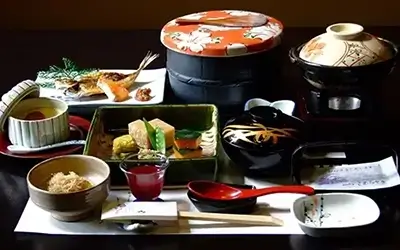
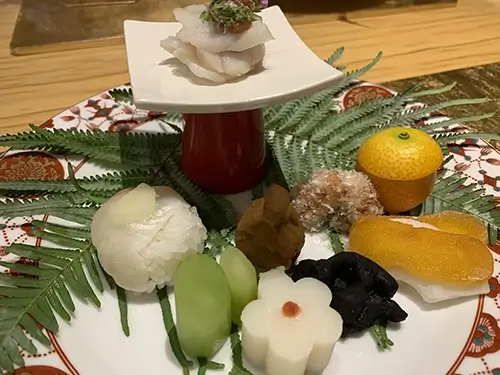
A traditional kaiseki meal typically includes 7 to 12 courses, served one by one in a specific order that reflects seasonal balance and culinary technique. Each course is small, but together they create a complete experience that engages all five senses.
Here’s a common structure of a kaiseki course :
• Sakizuke (先付) – A small appetizer to stimulate the palate, similar to an amuse-bouche
• Hassun (八寸) – Seasonal dish showcasing the theme of the meal, often including sushi or vegetables
• Suimono (吸い物) – A clear soup, elegantly flavored with dashi
• Mukōzuke (向付) – Sashimi of seasonal fish, often served with unique garnishes
• Yakimono (焼物) – A grilled dish, usually fish or meat
• Takiawase (炊合せ) – Simmered vegetables, each cooked separately to preserve flavor
• Shiizakana (強肴) – A substantial dish like hot pot or grilled beef
• Gohan, Tomewan & Kōno mono (ご飯・止椀・香の物) – Rice, miso soup, and seasonal pickles
• Mizumono (水物) – A light dessert, such as fresh fruit or a wagashi sweet

I know every course has its role, but I always look forward to the grilled dish (yakimono). The way the chef brings out the flavor of seasonal fish or meat—simple, but unforgettable.
Kaiseki vs. Omakase – What’s the Difference?
While both kaiseki and omakase are multi-course Japanese dining experiences, they differ in style, structure, and philosophy.
| Kaiseki | Omakase | |
|---|---|---|
| Meaning | “Kaiseki” refers to a traditional, seasonal multi-course meal | “Omakase” means “I’ll leave it to the chef” |
| Menu Style | Fixed courses, usually predetermined | Chef’s choice, often improvised |
| Cuisine Type | Balanced selection of dishes: soup, sashimi, grilled, simmered, rice, dessert | Primarily sushi, with appetizers and side dishes |
| Focus | Seasonality, harmony, presentation | Freshness, creativity, chef’s skills |
| Setting | Often served in ryokan or fine dining restaurants | Often served at a sushi counter with chef interaction |
In short : Kaiseki is about balance, aesthetics, and season, while omakase is about spontaneity, trust, and the chef’s artistry.

If it’s your first time in Japan, I’d go with kaiseki! You get a full range of traditional flavors—and the presentation is like edible art.
❓ Q&A – Kaiseki Dining Tips
How much does kaiseki cost?
Here’s a general price range
Lunch kaiseki: ¥5,000–¥8,000
Mid-range dinner: ¥10,000–¥20,000
High-end kaiseki: ¥20,000–¥40,000+ (especially in Michelin-starred restaurants)
Do I have to finish everything in a kaiseki meal?
It’s considered polite to try each course, but you’re not expected to clean every plate—especially if you’re full.
Kaiseki emphasizes hospitality, so your enjoyment matters more than finishing every bite. That said, leaving large amounts of food uneaten might be seen as rude, especially in more traditional settings.
What should I wear to a kaiseki dinner?
Smart casual is usually fine, especially for dinner.
At ryokan, wearing the provided yukata is often acceptable. Avoid flip-flops, tank tops, or very casual outfits—especially in high-end places.
Can vegetarians enjoy kaiseki?
Yes—but it depends on the restaurant. Some traditional kaiseki dishes use fish-based dashi (broth) or include seafood and meat.
However, many kaiseki restaurants—especially in Kyoto or temples—offer shōjin ryōri–inspired vegetarian courses upon request. Always inform the restaurant in advance of your dietary preferences, preferably at the time of booking.
Where can I try kaiseki in Japan?
• Traditional ryokan inns (often included with overnight stays)
• Specialty restaurants in cities like Kyoto, Tokyo, or Kanazawa
• Upscale hotel restaurants
If you want a smooth and authentic experience, our guided tours include kaiseki dining at carefully selected venues—no planning needed.