
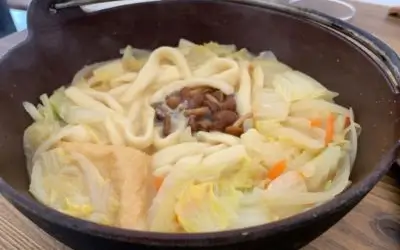
What is Hōtō?
Hōtō (ほうとう) is a traditional noodle soup from Yamanashi Prefecture, especially popular around the Mt. Fuji and Kawaguchiko area. It’s made with thick, flat noodles simmered in a hearty miso-based broth, along with local seasonal vegetables like pumpkin, mushrooms, carrots, and sometimes even wild greens.
Unlike udon, hōtō noodles are made without salt, and they’re simmered directly in the soup—giving the broth a rich, slightly starchy texture. This comforting, rustic dish is a local favorite during autumn and winter, but you’ll find it year-round in restaurants across the region.
→Want to enjoy hōtō along with Mt. Fuji views, caves, and local hot springs? Check out our guided tours that let you taste and explore it all.
Recommended Places to Try Hōtō
Here are three well-known spots near Mt. Fuji to experience authentic hōtō :
Hōtō Fudō (ほうとう不動) – Kawaguchiko North Main Branch
What makes it special : Famous for its giant cast-iron pots and thick handmade noodles. The modern white hut-shaped building is hard to miss.
Details : Tourist-friendly with English menus, quick service, and a warm, rustic atmosphere. Great after visiting Lake Kawaguchi or nearby caves.
Address : 〒401-0304 Yamanashi, Fujikawaguchiko, Kawaguchi 707
Official website : https://www.houtou-fudou.jp
Kosaku (小作) – Fujikawaguchiko Main Store
What makes it special : A local institution, serving deeply flavorful miso-based hōtō in large portions.
Details : Well-known for its authentic vibe and wide selection of side dishes. Expect a bit of a wait during peak times.
Address : 〒401-0301 Yamanashi, Fujikawaguchiko, Funatsu 2458
Official website: https://www.kosaku.co.jp
Hōtō Kura Funari (ほうとう蔵 歩成) – Funatsu Area
What makes it special : Award-winning hōtō with perfectly balanced miso and tender noodles. Slightly more upscale than traditional shops.
Details : Clean, modern design and friendly staff. A good choice for couples or travelers looking for a stylish lunch spot.
Address : 〒403-0004 Yamanashi, Fujiyoshida, Shimoyoshida 2-1-18
Official website: https://www.funari.jp

After visiting the Ice Cave in early November, I sat down to a steaming bowl of hōtō.
Thick noodles, sweet pumpkin, and miso broth—it was like eating comfort in a bowl. You’ve got to try it if you’re nearby!
What’s the Difference Between Hōtō and Udon?
At first glance, hōtō may look like a type of udon—but they’re quite different in both texture and tradition.
🔹 Ingredients & Dough
While both use wheat flour, hōtō noodles contain no salt, unlike udon. This makes the dough softer and more rustic, and it absorbs the flavor of the soup better.
🔹 Shape & Texture
Udon noodles are typically round or square and smooth, but hōtō noodles are flat, wide, and unevenly cut. They are more chewy and starchy, giving the soup a slightly thickened texture after cooking together in the same pot.
🔹 Cooking Method
Hōtō noodles are simmered directly in the miso-based soup with vegetables, rather than boiled separately like udon. This process allows the noodles to thicken the broth and blend into the overall flavor.
🔹 Cultural Role
Hōtō is not served in a delicate, refined style like udon sometimes is. Instead, it’s seen as a rustic, local farmhouse dish—hearty, seasonal, and made to warm you up. It’s deeply rooted in Yamanashi’s rural food culture, especially in colder seasons.

I used to think it was just “thick udon,” but hōtō really has its own character. The texture, the way it blends into the soup—it’s not just a meal, it’s a whole warm experience!