
Located in Tokyo’s bustling business district surrounded by skyscrapers, Hamarikyu Gardens is a historic Japanese landscape garden that offers a peaceful escape from the urban hustle. This garden served as a falconry ground for the Tokugawa shogunate and later developed into the “Hama Goten” (Beach Palace). Featuring a seawater pond that changes with the tides and two duck hunting grounds, it’s designated as both a Special National Place of Scenic Beauty and a Special Historical Site.

Garden Highlights
The Seawater Pond
The garden’s unique seawater pond, filled from Tokyo Bay, changes its appearance with the tides. As the last remaining tidal pond in Tokyo, it preserves the atmosphere of the Edo period. The pond is home to saltwater fish like striped mullet and sea bass, creating a precious natural environment in the heart of the city.
Duck Hunting Grounds
The garden contains two preserved duck hunting grounds where the shoguns once practiced “kamo-gari” (duck hunting) using hawks and nets. These facilities remain in excellent condition, allowing visitors to imagine the scenes of historical hunting practices.You can find two duck hunting sites in the garden. It was one of the shoguns’ hobbies to hunt ducks using hawks or a net from behind mounds.

Caede’s Personal Tip:
*”For the most magical experience, I love visiting around 3 PM – you’ll enjoy the garden in daylight, watch the sunset behind the skyscrapers, and see the evening lights create beautiful reflections in the tidal ponds. The contrast between traditional garden and modern cityscape is absolutely breathtaking! Afterward, I recommend walking to the nearby* Tsukiji Outer Market for some fresh sushi – it’s the perfect cultural combination.”
Seasonal Flowers
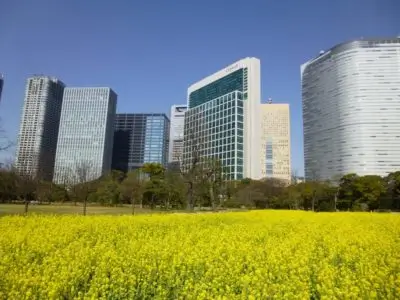
Visitors can enjoy seasonal flowers throughout the year: rape blossoms, cherry blossoms, and azaleas in spring; Japanese iris and hydrangeas in summer; bush clover and autumn leaves in fall; and camellias and narcissus in winter. The spring landscape with over 300 rape blossom plants offers unexpected tranquility in the city center.
FAQ: Your Questions About Hamarikyu Gardens Answered
Q: What makes Hamarikyu Gardens unique compared to other gardens in Tokyo?
A: Hamarikyu’s most distinctive feature is its seawater pond (shioiri-no-ike), which fills and drains with the tides from Tokyo Bay. This rare design preserves Edo-period gardening techniques and creates a unique ecosystem where saltwater fish like sea bass can thrive. The striking contrast between the traditional garden and surrounding skyscrapers is also unmatched. For a different garden style, consider visiting Rikugien Garden with its classical strolling design.
Q: How much time should I spend at Hamarikyu Gardens?
A: Allow 1.5 to 2 hours for a leisurely visit. This gives you time to stroll the main paths, observe the tidal changes, enjoy seasonal flowers, and possibly enjoy matcha at the teahouse. If arriving by water bus, factor in additional time for the scenic approach.
Q: Is the garden accessible for strollers or visitors with mobility needs?
A: Yes, the main garden paths are flat and paved, making them suitable for strollers and wheelchairs. Some smaller bridges and traditional teahouse areas may have steps, so checking the garden map at the entrance is recommended. Wheelchair loans are available at the main gate upon request.
Q: What’s the best transportation method to reach Hamarikyu?
A: The most scenic approach is by water bus from Asakusa (about 35 minutes), offering beautiful views of Tokyo’s waterways. By land, it’s a 7-minute walk from Toei Oedo Line “Tsukijishijo Station” or a 12-minute walk from JR “Shimbashi Station.” Combining your visit with the nearby Tsukiji Outer Market makes for a perfect cultural and culinary experience.

Caede’s Special Insight:
“My personal favorite is timing my visit with the tides. At low tide, the pond reveals its muddy bottom—like traveling back in time. At high tide, the water reflects the surrounding skyscrapers spectacularly. Check tide tables when planning! After Hamarikyu, seeing Tokyo from Tokyo Tower or Rainbow Bridge offers another wonderful perspective on the city’s relationship with water.”
Visitor Information
- Hours: 9:00 AM – 5:00 PM (last entry 4:30 PM)
- Admission: Adults ¥300, Seniors (65+) ¥150
- Access: 7-minute walk from Toei Oedo Line “Tsukijishijo Station”, 12-minute walk from JR “Shimbashi Station”
- Water Bus: Direct access from Asakusa and Odaiba

Caede’s Advice
“I highly recommend arriving by water bus! The 35-minute ride from Asakusa offers wonderful views of Tokyo’s waterways before you even enter the garden. After exploring the gardens, walking to Tsukiji Outer Market for fresh seafood completes my perfect Tokyo day. For another beautiful garden experience, consider visiting Rikugien Garden to compare different gardening styles.”
Hamarikyu Gardens offers a precious space that combines historical significance with natural beauty right in central Tokyo. It’s the perfect place to rest tired feet after sightseeing while enjoying a moment of peaceful contemplation amidst the bustling city.
Your Japan Tour
As seasoned Japan experts, we create perfect Japan package tours including destinations like the Hamarikyu Gardens. Check out our group tours and private tours, or contact us to start planning your unforgettable holiday to this fascinating country. Japan is full of once-in-a-lifetime experiences, culture, history, nature, and delicious food!