
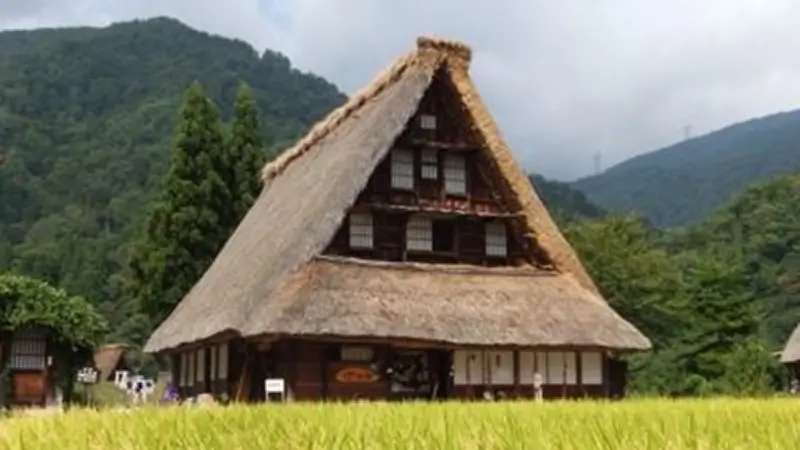
What is Gokayama?
Tucked deep in the mountains of Toyama Prefecture, Gokayama (五箇山) is a quiet village region renowned for its iconic gassho-zukuri farmhouses—steeply pitched thatched roofs designed like “hands in prayer” to withstand heavy snowfall. These villages are part of a UNESCO World Heritage Site, recognized for their historical importance and architectural ingenuity.
Unlike its more famous neighbor, Shirakawa-go, Gokayama remains off the beaten path, offering a more authentic, unspoiled rural atmosphere. This makes it an ideal destination for travelers seeking to escape modern city life and immerse themselves in Japan’s traditional countryside.
The name “Gokayama” means “Five Mountains,” referring to the five surrounding valleys. With their remote setting and preserved traditions, the villages here feel frozen in time.
Highlights
Ainokura Village
Ainokura is the largest and most visited village in Gokayama. With more than 20 preserved gassho-zukuri houses, many still inhabited by local families, the village offers postcard-perfect views year-round.
In spring and summer, lush greenery and rice paddies surround the thatched rooftops. In autumn, golden leaves frame the village. And in winter, heavy snow turns Ainokura into a quiet, fairytale-like landscape.
Inside several houses-turned-museums, you can explore old tools, silk farming equipment, and handwoven items used by villagers for generations.
Suganuma Village
Suganuma is smaller and even quieter than Ainokura. A visit here includes stops at the Gokayama Folk Museum and Saltpeter Museum, which highlight the village’s roles in both agriculture and early Japanese gunpowder production.
The short riverside trail connecting the clustered houses offers great spots for photos and reflection. If you visit in the evening, soft lighting gives the entire area a magical glow.
Traditional Washi Paper Making
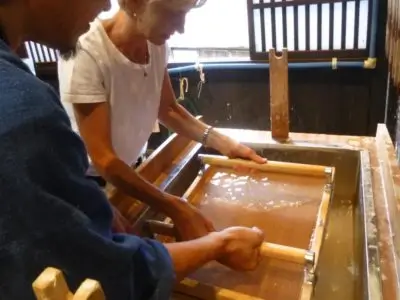
Gokayama is also one of Japan’s best places to experience washi paper making, a UNESCO Intangible Cultural Heritage. Workshops in the region use kozo (mulberry) bark and traditional techniques passed down for centuries.
Visitors can participate in hands-on classes where they create their own postcards or sheets of washi, often decorated with dried flowers or seasonal designs.
Regional Culture and Music
Gokayama is also home to the Kokiriko dance, considered Japan’s oldest folk song and performed with traditional wooden clappers called sasara. Performances are occasionally held at local festivals, and some guesthouses offer demonstrations upon request.
How to Get There
Gokayama is accessible from Kanazawa, Toyama, and Shirakawa-go by car or bus.
- From Kanazawa: Approx. 90 mins by highway bus or rental car.
- From Toyama Station: 80–90 minutes by bus (via Johana or Taira).
- From Shirakawa-go: Around 30 minutes by bus.
Buses to Ainokura and Suganuma are limited, so checking the latest timetable and reserving seats in advance is recommended.
Guest Experience & Recommended Tours
“Our guide took us to a washi workshop in the valley. It was quiet except for the water troughs and paper frames. I made my own postcard with pressed flowers—and the staff wrapped it so carefully. A highlight of our Japan trip.”
Recommended Tours
Q&A – Gokayama Travel Tips
Is it worth going to Gokayama?
Yes! Gokayama offers a peaceful, cultural experience in a UNESCO-listed village setting, far from the usual tourist crowds.
Which is better, Shirakawa-go or Gokayama?
Shirakawa-go is larger and more popular, while Gokayama is quieter and more immersive. If you prefer fewer people and deeper cultural interaction, Gokayama is better.
What is Gokayama known for?
Gokayama is known for gassho-style houses, UNESCO recognition, traditional washi paper, and the Kokiriko folk song.
Do people live in Gokayama?
Yes. Many homes are still privately owned and inhabited by locals, some of whom run guesthouses or museums.
Visitor Info
- Location: Nanto City, Toyama Prefecture
- Access: Bus from Kanazawa or Toyama; limited local buses to Ainokura/Suganuma
- Hours: Open year-round (some museums closed in winter or mid-week)
- Admission: Villages free to enter; museums: ¥200–¥300
- Best season: Spring for rice planting, autumn for foliage, winter for snow views
Last updated: December 2025