
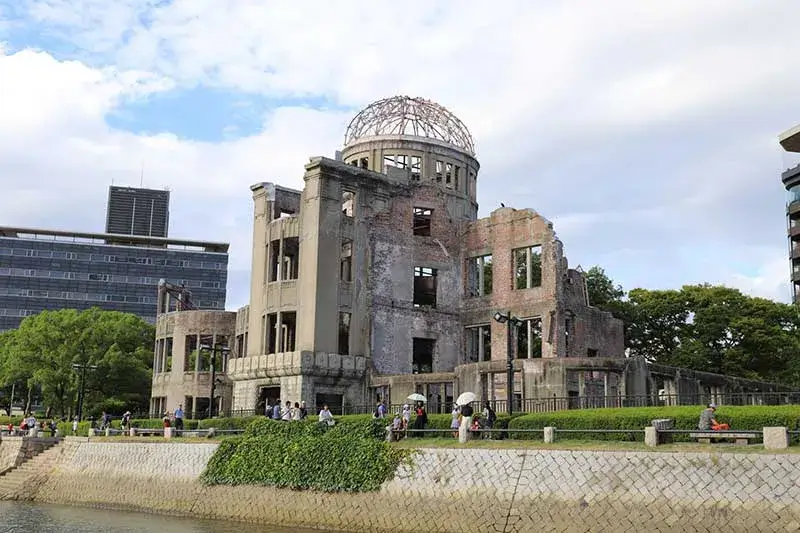
A skeletal dome standing silently by the river—it’s one of the most haunting and powerful images in all of Japan. The Atomic Bomb Dome, or Genbaku Dome, is the preserved ruin of a building that stood just 160 meters from the epicenter of the world’s first nuclear attack. On August 6, 1945, Hiroshima was devastated in seconds. This building remained.
Now a UNESCO World Heritage Site, the Dome is not just a reminder of destruction—it’s a global symbol of peace. Surrounded by Hiroshima’s Peace Memorial Park, the site draws millions of visitors each year who come to reflect, learn, and hope for a better future.
What Is the Atomic Bomb Dome?
Originally constructed in 1915, the building now known as the Atomic Bomb Dome was once the Hiroshima Prefectural Industrial Promotion Hall. Designed by Czech architect Jan Letzel, it stood as a symbol of Hiroshima’s modernity—hosting exhibitions, trade events, and government offices. That all changed on August 6, 1945, when the first atomic bomb used in warfare exploded almost directly overhead. Nearly everything within a two-kilometer radius was reduced to ashes, but this building’s steel frame and partial outer walls remained upright.
In the years that followed, locals debated whether to preserve the ruin or remove it. Ultimately, the decision was made to leave it standing—not as a reminder of war, but as a symbol of peace. It was officially named a UNESCO World Heritage Site in 1996, recognized as a monument to human tragedy and hope.
Today, the Dome is the centerpiece of the Hiroshima Peace Memorial Park, serving as a place for reflection and remembrance.

I visited in the early morning, and there were only a few people around. I walked slowly around the Dome, reading the plaques and looking at the twisted steel beams still frozen in place. You could see scorch marks on the bricks. I had studied it in school, but being face to face with the real thing—it hits differently.
Why Did the Dome Survive the Atomic Bomb?
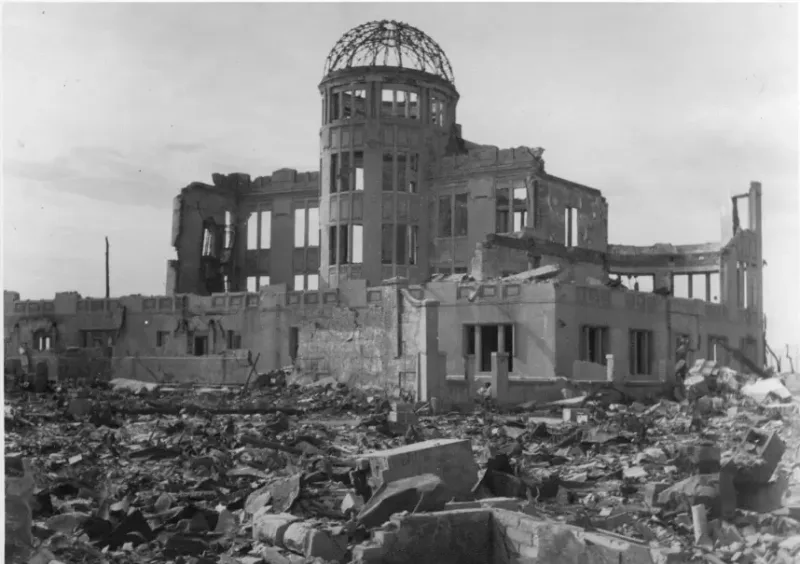
The atomic bomb detonated about 160 meters southeast of the building—almost directly overhead. Because of this near-vertical blast, the central dome structure withstood the downward force, while buildings farther away were flattened by the lateral shockwave and fire.
Several factors contributed to its survival:
• Reinforced European-style design with thick walls and steel framework
• Proximity to the hypocenter, which oddly shielded the structure from side-blast destruction
• Partial interior collapse, but enough framework remained to prevent total ruin
It became one of the few structures left standing near the epicenter, and its skeletal form has remained almost untouched since 1945. The survival of the Dome was so unique that it quickly became a symbol—first of tragedy, and later of peace and memory.
Is the Hiroshima Dome Still Radioactive?
It’s a common question for first-time visitors—and the short answer is: no, it’s not. Radiation levels in Hiroshima returned to normal background levels within a year of the bombing. This is because the atomic bomb exploded about 600 meters above the city, dispersing radioactive material into the upper atmosphere rather than contaminating the ground directly.
Today, the area around the Atomic Bomb Dome is completely safe. Locals walk their dogs here. Children play in the nearby Peace Park. School groups, tourists, and even newlyweds in kimono stroll past the Dome every day.
Is the Hiroshima Crater Still There?
Despite the immense destruction caused by the atomic bomb, there is no visible crater in Hiroshima today—or even in the days immediately following the blast. That’s because the bomb exploded about 600 meters above the ground, designed as an airburst to maximize damage across a wide area. The shockwave and intense heat flattened buildings and ignited fires across the city, but it did not create a crater in the ground like a ground-impact bomb would.
Today, the area around the hypocenter is fully rebuilt. The city has grown into a vibrant and modern community, with almost no physical traces of the crater-like destruction—only the Dome remains as a silent witness.
Around the Atomic Bomb Dome
Peace Memorial Museum
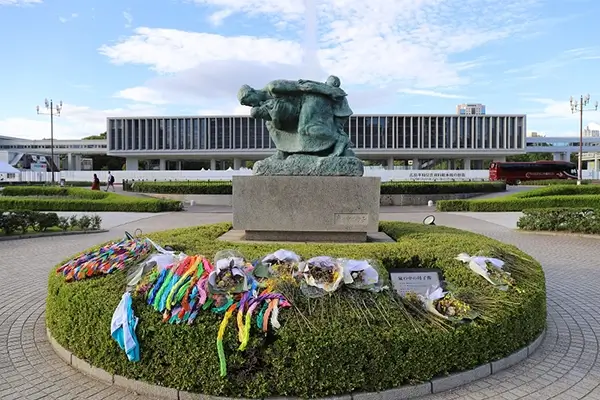
This powerful museum offers a sobering look at the events of August 6, 1945, through survivor testimonies, photos, and artifacts.
It’s emotionally intense—but essential for understanding the impact of nuclear war.
Children’s Peace Monument

This monument honors Sadako Sasaki and thousands of child victims of the atomic bombing.
Surrounded by colorful paper cranes sent from around the world, it’s a moving symbol of hope and peace.
Peace Flame
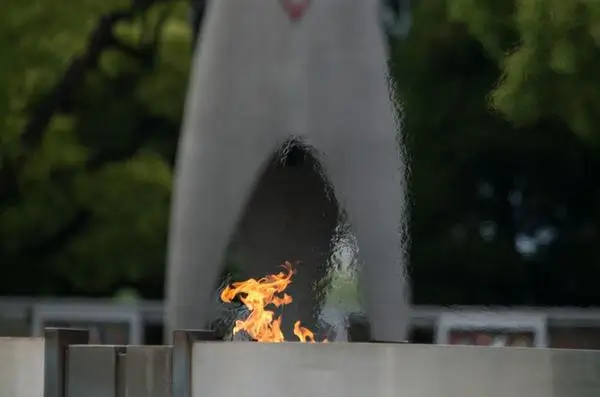
This flame has burned continuously since 1964 and will not be extinguished until all nuclear weapons are abolished.
It sits along the park’s main axis, symbolizing both remembrance and global commitment to peace.
Memorial Cenotaph
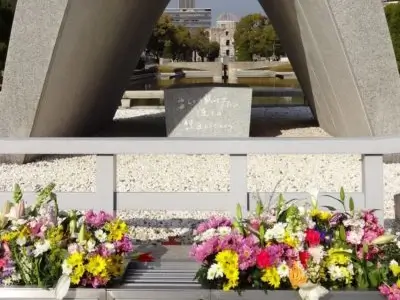
An arched stone monument containing the names of all known victims.
Through its arch, you can see the flame and the Dome—three monuments perfectly aligned to represent past, present, and future.
You can walk the entire area in 1 to 2 hours, depending on how deeply you explore the museum. Many visitors choose to visit in the morning or late afternoon for a quieter, more reflective experience.
If you’re visiting Hiroshima for the first time, consider a guided tour that includes both the Peace Park and Miyajima Island—especially if you want cultural insights, translation support, and historical background explained clearly.
Access – How to Get to the Atomic Bomb Dome
Atomic Bomb Dome is located in Hiroshima Peace Memorial Park, along the Motoyasu River in central Hiroshima.
• From Hiroshima Station, take tram Line 2 or 6 to Genbaku Dome-mae stop (about 20 minutes)
• The Dome is a 5-minute walk from the tram stop
• The site is located in central Hiroshima, along the Motoyasu River, and is easy to reach on foot
Visitor Info
Opening Hours & Admission
• Atomic Bomb Dome: Open-air site, viewable 24 hours
• Peace Memorial Museum: 8:30 AM – 6:00 PM (until 7:00 PM in summer)
• Closed: December 30–31
• Admission (Museum): ¥200 (adults), ¥100 (students)
Language Support
• English signage throughout the park
• Museum offers multilingual audio guides
• Tours with English-speaking guides are also available
Last updated: December 2025