
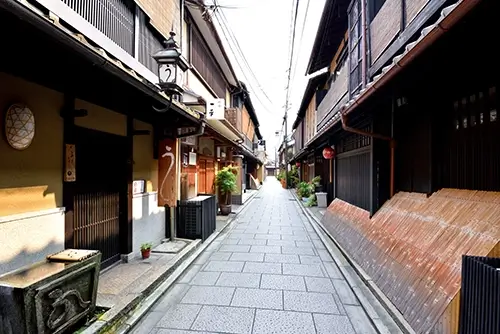
The history of Kyoto goes all the way back to the 8th century. Built as the capital of Japan in 794, the city served as the permanent home of the Imperial Court until the capital officially moved to Tokyo in 1868. While it is no longer the nation’s political center, Kyoto remains the undisputed cultural soul of Japan. Unlike many modern Japanese metropolises, Kyoto was largely spared from the bombings of World War II due to its irreplaceable historical value. Today, walking through Kyoto feels like stepping into a living museum where centuries of history seep from every hidden alley, temple gate, and traditional machiya townhouse.
The Timeline of an Imperial Capital: Heian to Meiji Eras
Kyoto was originally laid out in a grand rectangular grid designed to resemble the ancient Chinese capital of Chang’an during the Tang Dynasty. Over the centuries, political power regularly shifted back and forth across the country. In 1185, the Minamoto clan seized power and established a military shogunate in Kamakura, but by 1333, the shogunal seat returned to Kyoto. This era saw the construction of iconic landmarks like the Golden Pavilion (Kinkaku-ji) and Nanzen-ji Temple as Buddhism gained massive popularity. Later, during the peaceful Edo period, arts and culture flourished, establishing Kyoto as Japan’s premier center for elite traditional crafts like ceramics, lacquerware, and fan making.
Planning to see this yourself? We run Japan Private Tour 6 days | Beautiful Cherry Blossoms, and you can browse every itinerary in our Kyoto and Japan-wide tours.
A Modern City Preserving Its Ancient Cultural Roots
When the Emperor relocated to Tokyo in 1868, Kyoto faced the sudden challenge of maintaining its relevance. The city responded with rapid modernization, pioneering Japan’s very first hydroelectric power plant, digging the massive Lake Biwa Canal, and installing some of the country’s first electric trams. Because Kyoto lacked a major deepwater harbor, heavy modern industries did not take over the landscape as they did in Tokyo or Osaka. Instead, Kyoto brilliantly doubled down on its traditional roots. Neighborhoods like Fushimi continued to refine their globally renowned sake brewing techniques, while the city transformed itself into a prestigious hub for higher education and world-class museums.
Step Off the Beaten Path: Exploring Local Murasakino
Once travelers finish the basic “beginner’s course” of checking off crowded tourist hotspots, the real magic of Kyoto is found by diving into its quiet local neighborhoods. The peaceful Murasakino district in northwestern Kyoto offers the perfect escape into everyday local life. Strolling down these serene streets reveals nostalgic, decades-old artisanal shops—including neighborhood fishmongers, handmade tofu makers, traditional pickle shops, and narrow tea stores packed with weathered wooden boxes where soft-spoken shopkeepers still welcome travelers for a chat over a freshly brewed cup of green tea.
Authentically Local Evenings: Sento and Izakaya Culture
An immersive day in a local neighborhood is best concluded by participating in a classic Japanese evening ritual: visiting a sento (neighborhood public bathhouse). A local favorite in Murasakino is Funaoka Onsen, a historic public bathhouse famous for its heavily detailed traditional wooden carvings and unique bathing areas where locals gather to unwind. While photography is strictly prohibited inside to protect privacy, the beautifully preserved layout offers an authentic slice of Japanese communal lifestyle. After a deeply relaxing soak, you can cross the street to a cozy neighborhood dining bar like Yakumo Shokudo for a cold glass of draft beer and comforting local food—the perfect ending to an off-the-beaten-path day.
Q & A
Q: Is 2 days in Kyoto enough time?
A: While 2 days allows you to glance at a few major “bucket-list” highlights like Fushimi Inari Shrine and Kinkaku-ji, it is generally not enough to truly experience the city. To appreciate Kyoto’s imperial history, explore hidden traditional temples, stroll through preserved machiya districts, and experience off-the-beaten-path local neighborhoods like Murasakino, we highly recommend spending at least 3 to 4 days.
Q: Why was Kyoto not bombed during WWII?
A: Kyoto was specifically removed from the atomic bomb target list due to its extraordinary cultural and historical significance. US Secretary of War Henry Stimson adamantly refused to destroy the city, recognizing that burning Japan’s ancient capital would cause deep, permanent resentment. He also held a personal fond appreciation for Kyoto after visiting the city years prior.
Q: What is the difference between a Sento and an Onsen in Kyoto?
A: An onsen uses naturally heated, mineral-rich volcanic spring water sourced directly from underground, often found in mountain or resort regions. A sento (like Funaoka Onsen in Murasakino) is a traditional neighborhood public bathhouse that historically used heated city tap water, serving as a vital daily social hub for locals whose older wooden homes lacked private indoor showers.
Q: How do you get around Kyoto easily as a tourist?
A: Unlike Tokyo’s massive subway system, Kyoto is best navigated using a strategic combination of the city subway lines, local buses, and walking. For off-the-beaten-path areas like northwest Kyoto, utilizing local buses or renting a bicycle is highly efficient. For a completely seamless experience, hiring a private vehicle or booking a guided tour with a local expert helps you easily bypass navigating the transit system on your own.
Last updated: July 2026